 United States
•
10 views
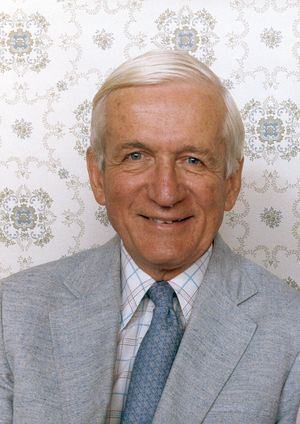
Norman Foster Ramsey Jr.

Washington, D.C., United States
Archival Overview
American physicist who received the 1989 Nobel Prize in Physics for inventing the separated oscillatory fields method, which enabled modern cesium atomic clocks and GPS navigation.
Biographical Record
Norman Foster Ramsey Jr. studied at Columbia University under I. I. Rabi and earned a second degree from Cambridge University. During World War II, he led radar development at the MIT Radiation Laboratory and headed the delivery group for Project Alberta in the Manhattan Project.
As a professor at Harvard University for four decades, Ramsey developed the separated oscillatory fields method in 1949, dramatically increasing the precision of molecular beam magnetic resonance. In 1960, together with Daniel Kleppner, he invented the hydrogen maser, providing the frequency standards that underpin atomic timekeeping, satellite communications, and GPS.
Key Life Milestones
Separated Oscillatory Fields Method
Devised the revolutionary resonance technique that formed the operating foundation for ultra-precise atomic clocks.
Nobel Prize in Physics
Awarded the Nobel Prize for his separated oscillatory fields method and its application to the hydrogen maser and atomic clocks.
Memorial Guestbook & Tributes
0 messages recordedLeave a Respectful Tribute
Final Resting Place
Perpetual MemorialWayland, United States