 Denmark
•
7 views
Denmark
•
7 views
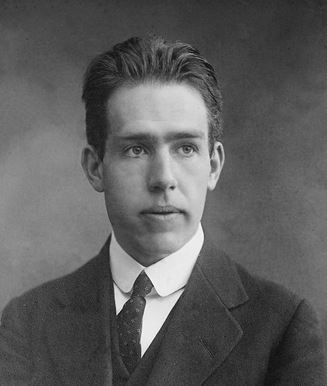
Niels Bohr

Copenhagen, Denmark
Archival Overview
Danish physicist whose quantum model of the atom and Principle of Complementarity founded atomic physics and the Copenhagen interpretation of quantum mechanics, winning the 1922 Nobel Prize.
Biographical Record
Niels Henrik David Bohr (1885–1962) transformed modern physics in 1913 by introducing the Bohr atomic model. Combining Rutherford's nuclear atom with Planck's quantum concept, Bohr proposed that electrons travel in quantized, stable orbits, emitting or absorbing radiation only when transitioning between discrete energy levels, explaining the spectral lines of hydrogen.
At his Copenhagen Institute for Theoretical Physics, Bohr mentored the founders of quantum mechanics. He formulated the Copenhagen interpretation and the Principle of Complementarity—that quantum entities exhibit mutually exclusive wave and particle properties depending on the experimental setup. Element 107, bohrium, honors his monumental contributions.
Key Life Milestones
Publication of the Bohr Model of the Atom
Published his historic trilogy in Philosophical Magazine introducing quantized electron orbits and explaining atomic spectra.
Nobel Prize in Physics
Awarded the Nobel Prize for his investigation of the structure of atoms and the radiation emanating from them.
Memorial Guestbook & Tributes
0 messages recordedLeave a Respectful Tribute
Final Resting Place
Perpetual MemorialCopenhagen, Denmark