 Iran
•
12 views
Iran
•
12 views
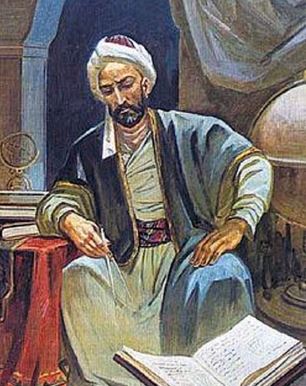
Nasir al-Din al-Tusi

Tus (Khorasan), Iran
Archival Overview
Persian polymath who designed the Maragheh Observatory, invented the Tusi-couple geometric model that inspired Copernicus, and authored the foundational moral treatise Akhlaq-i Nasiri.
Biographical Record
Nasir al-Din al-Tusi (1201–1274 CE) was one of the most versatile minds of the medieval Islamic world. Surviving the Mongol conquests by residing in the mountain fortresses of Alamut, he later persuaded the Mongol ruler Hulagu Khan to construct the great Maragheh Observatory, assembling a world-class library of 400,000 volumes.
In ethics, his *Akhlaq-i Nasiri* (Nasirean Ethics) synthesized Aristotelian ethics with Platonic social theory and Islamic spirituality, defining justice as the harmonious balance of all human faculties. In mathematics, he separated trigonometry as an independent scientific discipline, and his 'Tusi-couple' became crucial for Copernican astronomy.
Key Life Milestones
Composition of 'Akhlaq-i Nasiri'
Authored his masterpiece on philosophical ethics, political economics, and household management.
Founding of the Maragheh Observatory
Constructed the world's most advanced observatory and research center, pioneering precision planetary tables.
Memorial Guestbook & Tributes
0 messages recordedLeave a Respectful Tribute
Final Resting Place
Perpetual MemorialKadhimiya (Baghdad), Iraq