 Egypt
•
14 views
Egypt
•
14 views
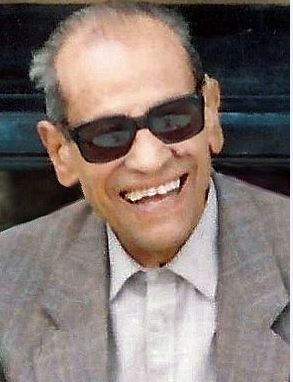
Naguib Mahfouz Abdelaziz Ibrahim Ahmed Pasha

Gamaleya (Old Cairo), Egypt
Archival Overview
Preeminent Egyptian literary giant and first Arabic-language writer to win the Nobel Prize in Literature (1988), whose monumental Cairo Trilogy (Palace Walk) and Children of Gebelawi captured the alleys and soul of Egypt over seven decades.
Biographical Record
Naguib Mahfouz (1911–2006), born in the historic quarter of Gamaleya in Islamic Cairo, worked as a quiet civil servant in the Ministry of Islamic Endowments while sitting daily in the El-Fishawy café in Khan el-Khalili, observing the colorful pageant of Cairo street life. Over a seventy-year career, Mahfouz wrote thirty-four novels, 350 short stories, and dozens of film screenplays.
His crowning masterpiece, The Cairo Trilogy (Palace Walk, Palace of Desire, Sugar Street, 1956–1957), chronicled three generations of the merchant Al-Sayyid Ahmad Abd al-Jawad's family from World War I through the overthrow of the monarchy, hailed as the Arabic equivalent of Balzac and Tolstoy. In 1959, his allegorical novel Children of Gebelawi (Awlad Haratina), retelling the lives of the prophets Adam, Moses, Jesus, and Muhammad in a Cairo alley, sparked religious controversy, leading to an extremist assassination attempt in 1994 where he survived a knife wound to the neck at age eighty-two. In 1988, he was awarded the Nobel Prize in Literature.
Key Life Milestones
Publication of The Cairo Trilogy (Al-Thulathiyya)
Published Palace Walk, Palace of Desire, and Sugar Street, establishing the epic summit of the modern Arabic novel.
Award of the Nobel Prize in Literature
Became the first Arabic-language writer in history to win the Nobel Prize, celebrated for his rich nuance of realism.
Memorial Guestbook & Tributes
0 messages recordedLeave a Respectful Tribute
Final Resting Place
Perpetual MemorialGiza (Cairo), Egypt