 Germany
•
13 views
Germany
•
13 views
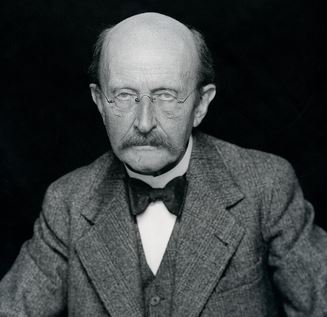
Max Planck

Kiel (Holstein), Germany
Archival Overview
German theoretical physicist who initiated the quantum revolution in 1900 by discovering that energy is emitted and absorbed in discrete packets called quanta, introducing Planck's constant (h).
Biographical Record
Max Karl Ernst Ludwig Planck (1858–1947) studied physics in Munich and Berlin under Kirchhoff and Helmholtz. In the late 1890s, Planck resolved the blackbody radiation crisis—the 'ultraviolet catastrophe' where classical electrodynamics failed to match thermal emission spectra.
On 14 December 1900, Planck introduced the revolutionary mathematical hypothesis that radiant energy is emitted and absorbed only in discrete energy units, or quanta: E = hν, where h is the fundamental quantum of action (Planck's constant). This conceptual leap founded quantum physics, earning Planck the 1918 Nobel Prize in Physics. Germany's premier scientific body, the Max Planck Society, perpetuates his legacy.
Key Life Milestones
Discovery of the Quantum of Action (Planck's Constant)
Presented his blackbody radiation derivation to the German Physical Society, introducing energy quanta E = hν.
Nobel Prize in Physics
Awarded the Nobel Prize in Physics in recognition of the services he rendered to the advancement of physics by his discovery of energy quanta.
Memorial Guestbook & Tributes
0 messages recordedLeave a Respectful Tribute
Final Resting Place
Perpetual MemorialGöttingen, Germany