 United States
•
13 views
United States
•
13 views
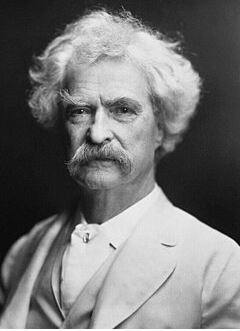
Samuel Langhorne Clemens (Mark Twain)

Florida (Missouri), United States
Archival Overview
America's greatest humorist and storyteller dubbed by Ernest Hemingway the source of 'all modern American literature', whose Adventures of Huckleberry Finn used vernacular dialect and moral irony to deliver a devastating critique of racism.
Biographical Record
Samuel Langhorne Clemens (1835–1910), born on the day Halley's Comet appeared, grew up in the Mississippi River port town of Hannibal, Missouri. Working as a riverboat pilot, he adopted his pen name Mark Twain from the boatman's cry meaning 'two fathoms deep' (safe water).
After gold prospecting in Nevada and achieving fame with his 1865 tall tale The Celebrated Jumping Frog of Calaveras County, Twain conquered the world with his travel satire The Innocents Abroad. In The Adventures of Tom Sawyer (1876) and his magnum opus Adventures of Huckleberry Finn (1884), Twain used authentic vernacular American dialect. Huck's moral decision to help the runaway slave Jim escape ('All right, then, I'll go to hell!') struck a fatal literary blow against racial hypocrisy. True to his own prediction, Twain died on 21 April 1910, the day after Halley's Comet returned.
Key Life Milestones
Publication of Adventures of Huckleberry Finn
Published his masterpiece in London and New York, founding modern American literature through vernacular voice.
Passing with the Return of Halley's Comet
Passed away as Halley's Comet made its closest approach to Earth, fulfilling his own famous lifelong prophecy.
Memorial Guestbook & Tributes
0 messages recordedLeave a Respectful Tribute
Final Resting Place
Perpetual MemorialRedding (Connecticut), United States