 India
•
12 views
India
•
12 views
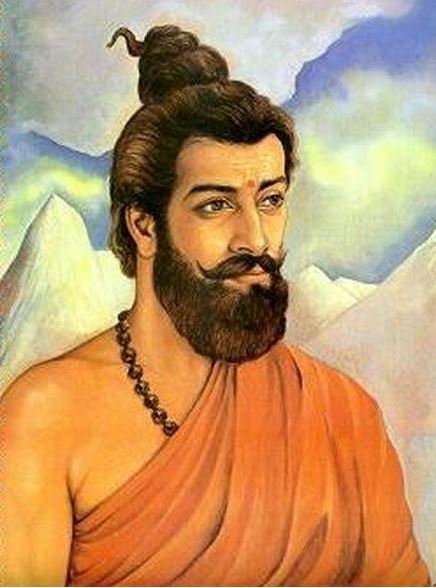
Maharishi Kanada

Prabhas Kshetra (Gujarat), India
Archival Overview
Ancient Indian sage who founded the Vaisheshika school of natural philosophy, formulating an atomic theory of matter (paramanu) centuries before modern chemistry.
Biographical Record
Maharishi Kanada (c. 6th century BCE), also known as Kashyapa, founded the *Vaisheshika* school of classical Indian thought. Known as 'Kanada' (the atom-eater) because he spent his life contemplating the ultimate grains and particles of the physical universe, he developed a comprehensive physics and epistemology.
Kanada postulated that all material substance is made of eternal, indivisible, and invisible points of matter (*paramanu*). Two atoms combine to form a dyad (*dvyanuka*), and dyads form triads, creating the physical world. He cataloged reality into six categories (*padarthas*), anticipating principles of mass, motion, and causation.
Key Life Milestones
Composition of the Vaisheshika Sutras
Formulated the foundational treatise articulating atomism, physical motion (karma), and universal properties.
Classification of the Six Padarthas
Established the six fundamental categories of existence: substance, quality, activity, generality, particularity, and inherence.
Memorial Guestbook & Tributes
0 messages recordedLeave a Respectful Tribute
Final Resting Place
Perpetual MemorialPrabhas Patan, India