 German Empire
•
4 views
German Empire
•
4 views
Ludwig Erhard

Fürth, Bavaria, German Empire
Archival Overview
Father of the West German 'Economic Miracle' (Wirtschaftswunder) and Chancellor who created the Social Market Economy (Soziale Marktwirtschaft).
Biographical Record
Ludwig Wilhelm Erhard (1897–1977) was a German economist and Christian Democratic statesman celebrated as the architect of post-World War II West Germany's 'Economic Miracle' (Wirtschaftswunder). Severely wounded as an artilleryman in World War I, Erhard studied economics under Wilhelm Vershofen and Franz Oppenheimer at Frankfurt, refusing to join Nazi organizations and drafting post-war economic reconstruction plans in secret.
As Director of Economics for the Bizone in June 1948, Erhard took the audacious decision to abolish rationing and price controls on the very Sunday the Deutsche Mark was introduced, without Allied permission. Serving as Minister of Economics under Konrad Adenauer from 1949 to 1963 and as Chancellor from 1963 to 1966, he implemented the Soziale Marktwirtschaft (Social Market Economy), proving that free market competition combined with a strong social safety net could produce unprecedented mass prosperity ('Prosperity for All').
Key Life Milestones
Abolition of Price Controls
Abolished wartime price controls and rationing simultaneously with the currency reform, filling empty German shop shelves overnight.
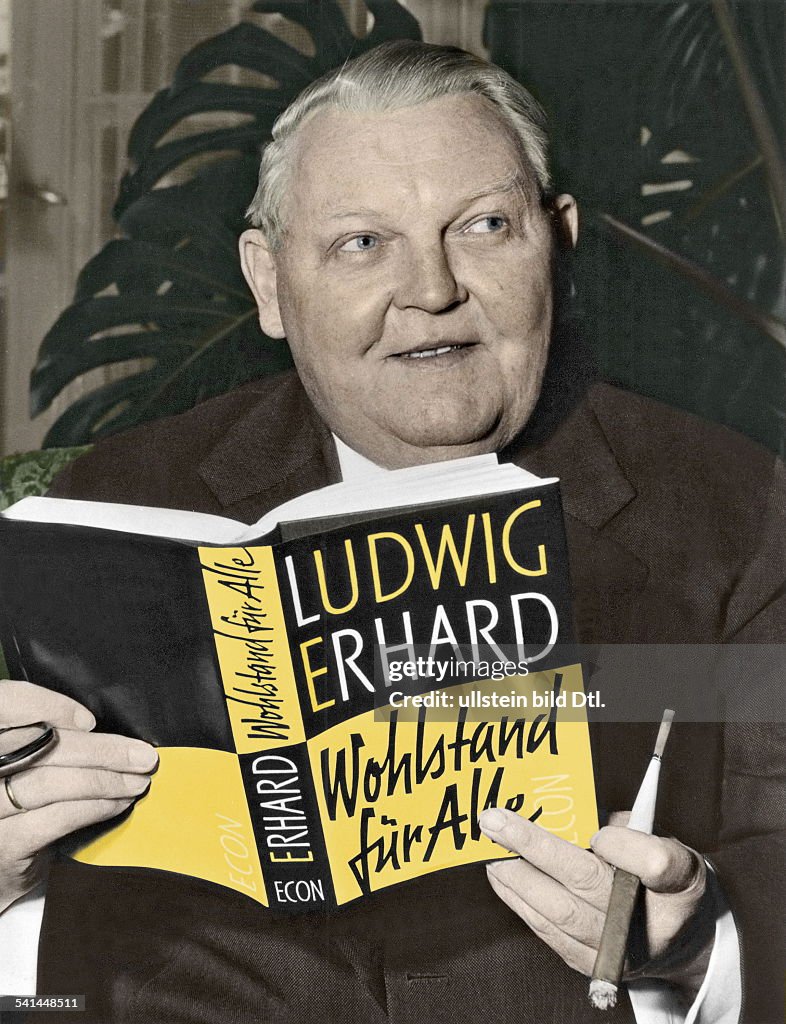
Wohlstand für Alle Published
Published his bestselling manifesto Wohlstand für alle, establishing the Social Market Economy as the economic foundation of modern Germany.
Memorial Guestbook & Tributes
0 messages recordedLeave a Respectful Tribute
Final Resting Place
Perpetual MemorialGmund am Tegernsee (Bavaria), Germany