 Austria
•
11 views
Austria
•
11 views
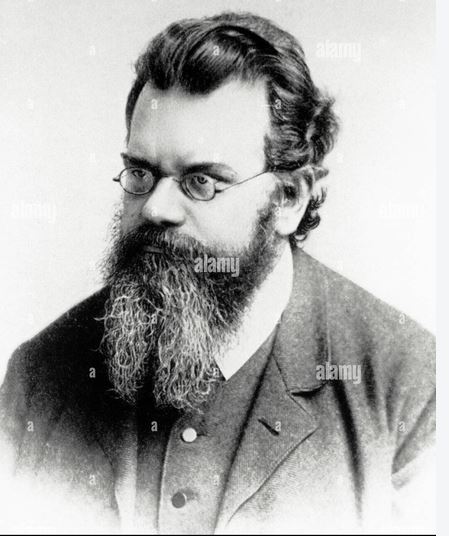
Ludwig Eduard Boltzmann

Vienna, Austria
Archival Overview
Austrian physicist whose development of statistical mechanics linked microscopic atomic collisions to macroscopic thermodynamics, formulating the statistical definition of entropy (S = k log W).
Biographical Record
Ludwig Eduard Boltzmann (1844–1906) revolutionized modern physics by showing that thermodynamic properties—such as temperature, pressure, and entropy—can be understood through the statistical distribution of velocities and collisions among enormous populations of molecules.
He derived the Maxwell-Boltzmann distribution and formulated the Boltzmann transport equation. His crowning achievement was connecting entropy to microscopic probability: S = k log W, proving that the Second Law of Thermodynamics reflects a statistical drive toward maximum microstate disorder. Despite fierce opposition from anti-atomists like Ernst Mach, Boltzmann's statistical framework founded 20th-century physics.
Key Life Milestones
Formulation of the H-Theorem
Published the kinetic gas theory paper proving the irreversible increase of entropy from mechanical collision kinetics.
Statistical Equation of Entropy (S = k log W)
Established that entropy measures the thermodynamic probability or multiplicity of microscopic states.
Memorial Guestbook & Tributes
0 messages recordedLeave a Respectful Tribute
Final Resting Place
Perpetual MemorialDuino (Trieste), Italy