 Roman Republic
•
4 views
Roman Republic
•
4 views
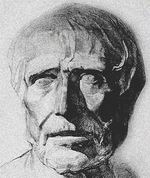
Titus Lucretius Carus

Rome, Roman Republic
Archival Overview
Roman poet and philosopher whose epic didactic poem De Rerum Natura (On the Nature of Things) expounded Epicurean atomism and liberated humans from superstitious dread.
Biographical Record
Titus Lucretius Carus (c. 99–c. 55 BCE) was a Roman poet and philosopher of the late Republic whose singular surviving work, the six-book didactic epic De Rerum Natura ('On the Nature of Things'), stands as a monument of Western philosophical materialism and scientific inquiry.
Dedicated to his patron Gaius Memmius, the poem translates Epicurus's atomist physics into sublime Latin dactylic hexameters. Lucretius explained natural phenomena without appeal to divine intervention, arguing that the universe consists solely of atoms and void, that the soul is mortal, and that human happiness requires freedom from the terrifying superstitions of eternal torment.
Key Life Milestones
De Rerum Natura Completed
Completed the six books of De Rerum Natura, presenting atomist physics and materialist cosmology in breathtaking hexameters.
Rediscovery by Poggio Bracciolini
His lost manuscript was discovered in a German monastery by humanist Poggio Bracciolini, sparking the scientific revolution.
Memorial Guestbook & Tributes
0 messages recordedLeave a Respectful Tribute
Final Resting Place
Perpetual MemorialNaples, Italy