 Italy
•
11 views
Italy
•
11 views
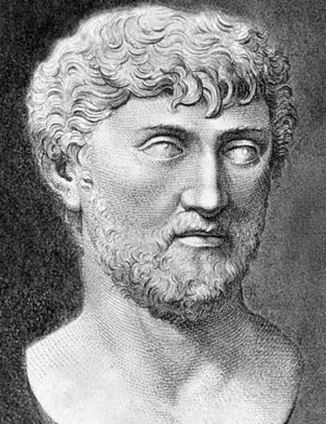
Lucretius (Titus Lucretius Carus)

Rome, Italy
Archival Overview
Roman poet and philosopher whose didactic epic De Rerum Natura (On the Nature of Things) articulated a sublime materialistic vision of the physical universe, atomism, and human freedom.
Biographical Record
Titus Lucretius Carus (c. 99–55 BCE) stands as one of the greatest poets and scientific thinkers of late Republican Rome. In his six-book hexameter masterpiece De Rerum Natura (On the Nature of Things), Lucretius undertook the monumental task of translating Greek atomism and Epicurean philosophy into stately Latin verse.
His work explained rain, lightning, disease, and the origin of life through natural physical mechanisms, anticipating concepts of natural selection, conservation of matter, and atomic motion. Rediscovered in a German monastery in 1417 by Poggio Bracciolini, his text ignited the scientific sparks of the European Renaissance.
Key Life Milestones
Publication of 'De Rerum Natura'
Circulated his six-volume poetic treatise explaining the atomic nature of the cosmos to Roman society.
Renaissance Rediscovery of the Manuscript
His lost manuscript was rediscovered by Poggio Bracciolini, unleashing modern materialistic and empirical philosophy.
Memorial Guestbook & Tributes
0 messages recordedLeave a Respectful Tribute
Final Resting Place
Perpetual MemorialRome, Italy