 China
•
9 views
China
•
9 views
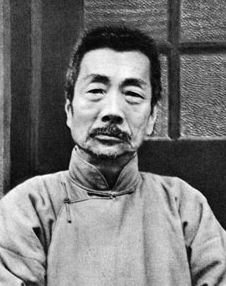
Zhou Shuren (Lu Xun)

Shaoxing (Zhejiang), China
Archival Overview
Revered as the foundational father of modern Chinese literature whose revolutionary vernacular stories A Madman's Diary (1918) and The True Story of Ah Q spearheaded the May Fourth cultural revolution, fiercely attacking feudal hypocrisy.
Biographical Record
Zhou Shuren (1881–1936), who wrote under the pen name Lu Xun, was studying Western medicine in Sendai, Japan, when a lantern-slide of the Russo-Japanese War showed a Chinese prisoner about to be decapitated while fellow Chinese onlookers stood apathy-stricken. Realizing that healing bodily disease was useless if the spiritual soul of the nation remained numb, Lu Xun abandoned medicine for literature.
In May 1918, in the revolutionary journal *New Youth*, Lu Xun published A Madman's Diary (Kuangren Riji)—the first modern story written in vernacular Chinese (baihua)—allegorizing four millennia of Confucian orthodoxy as literal cannibalism ('Save the children!'). In The True Story of Ah Q (1921), through a deluded peasant who interprets every humiliation as a moral victory, Lu Xun coined the concept of 'spiritual victory', permanently transforming Chinese self-awareness. At his 1936 funeral in Shanghai, his coffin was draped in a banner declaring him 'The Soul of the Nation'.
Key Life Milestones
Publication of A Madman's Diary (Kuangren Riji) in New Youth
Published the first masterpiece in modern vernacular Chinese, inaugurating the May Fourth cultural revolution.
Serialization of The True Story of Ah Q (Ah Q Zhengzhuan)
Serialized his devastating satirical masterpiece dissecting national complacency and psychological delusion.
Memorial Guestbook & Tributes
0 messages recordedLeave a Respectful Tribute
Final Resting Place
Perpetual MemorialShanghai, China