 United Kingdom
•
4,062 views
United Kingdom
•
4,062 views
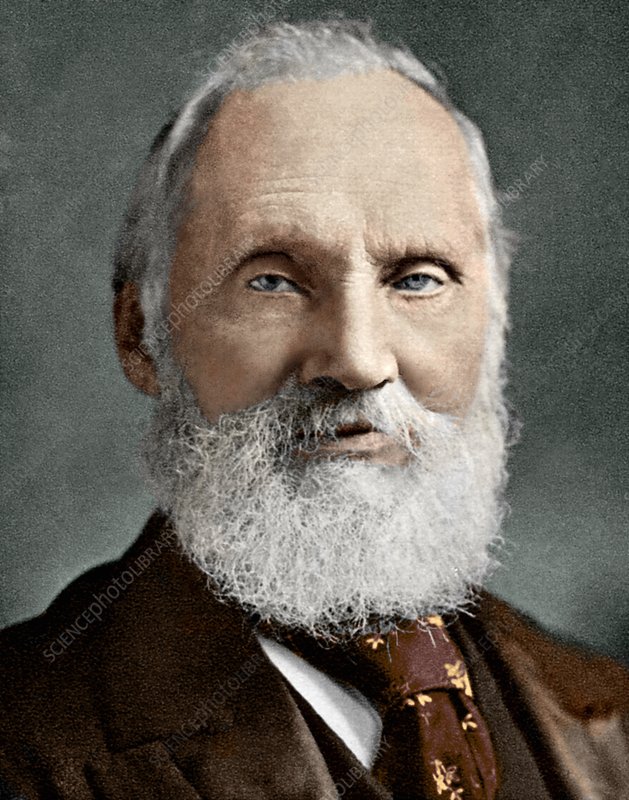
Lord Kelvin

Belfast, Ireland, United Kingdom
Archival Overview
Titan of Victorian science who established the absolute thermodynamic temperature scale and engineered the transatlantic cable.
Biographical Record
William Thomson, 1st Baron Kelvin, was a colossal British mathematical physicist and engineer who dominated nineteenth-century physical sciences. Entering the University of Glasgow at age ten, he was appointed to its chair of natural philosophy at twenty-two, holding it for fifty-three years. Thomson played an instrumental role in formulating the first and second laws of thermodynamics, collaborating with James Prescott Joule on the Joule-Thomson effect in refrigeration.
In 1848, Thomson proposed the absolute temperature scale, setting absolute zero at minus 273.15 degrees Celsius—the point where all thermal atomic motion ceases—which is measured today in the SI base unit named the kelvin (K). An intrepid practical inventor, Thomson personally sailed on cable-laying ships to overcome signal dispersion, patenting the mirror galvanometer and siphon recorder that made the historic 1866 transatlantic telegraph cable successful. For this monumental triumph of Victorian engineering, he was ennobled as Baron Kelvin of Largs.
Key Life Milestones
Establishment of Absolute Zero
Proposed the absolute thermodynamic temperature scale, establishing absolute zero as an immutable physical limit.
Transatlantic Telegraph Cable Triumph
Engineered electrical signaling instruments aboard the SS Great Eastern, connecting the Old and New Worlds instantaneously.
Memorial Guestbook & Tributes
0 messages recordedLeave a Respectful Tribute
Final Resting Place
Perpetual MemorialLondon, United Kingdom