 China
•
11 views
China
•
11 views
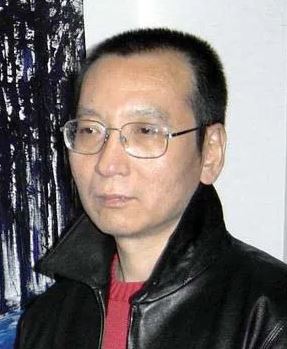
Liu Xiaobo

Changchun, Jilin, China
Archival Overview
Liu Xiaobo was a renowned Chinese literary critic, university professor, and dissident intellectual who was awarded the 2010 Nobel Peace Prize for his sustained and non-violent struggle for fundamental human rights in China. A central figure during the 1989 Tiananmen Square protests who negotiated safe passage for student protesters, he co-authored Charter 08 demanding constitutional democracy and died while in state custody in 2017.
Biographical Record
Liu Xiaobo was born in Changchun, Jilin Province, into an intellectual family. Earning his doctorate in literature from Beijing Normal University, he became one of China's most provocative literary critics and cultural theorists. In the spring of 1989, while serving as a visiting scholar at Columbia University in New York, Liu cut his fellowship short to return to Beijing and join the student-led pro-democracy movement occupying Tiananmen Square.
On 2 June 1989, Liu and three colleagues launched a high-profile four-man hunger strike on the square. During the military crackdown on the night of 3–4 June, Liu negotiated with army commanders to open a withdrawal corridor, saving hundreds of young student lives. Arrested immediately afterward, he was imprisoned for two years, stripped of his academic post, and subsequently sent to a re-education-through-labor camp between 1996 and 1999 for advocating peaceful political dialogue with Taiwan.
In December 2008, Liu co-authored and coordinated Charter 08, a historic manifesto signed by over 300 Chinese scholars, lawyers, and citizens calling for political reforms, an independent judiciary, freedom of speech, and the end of one-party rule. Detained days before the charter's release, he was sentenced in 2009 to eleven years for 'inciting subversion.' In 2010, the Nobel Peace Prize was awarded to him in absentia, poignantly represented by an empty chair in Oslo. Diagnosed with terminal liver cancer in prison in 2017, he died under tight state guard in Shenyang, becoming the first Nobel Peace laureate to die in detention since Carl von Ossietzky in 1938.
Key Life Milestones
Co-Authored and Promulgated Charter 08
Co-wrote the landmark civic manifesto calling for democracy, separation of powers, and universal human rights across China.
Awarded Nobel Peace Prize in Absentia
Conferred the Nobel Peace Prize, powerfully symbolized by an empty chair in Oslo due to his imprisonment by Beijing authorities.
Memorial Guestbook & Tributes
0 messages recordedLeave a Respectful Tribute
Final Resting Place
Perpetual MemorialShenyang, Liaoning, China