 Russian Empire
•
1 views
Russian Empire
•
1 views
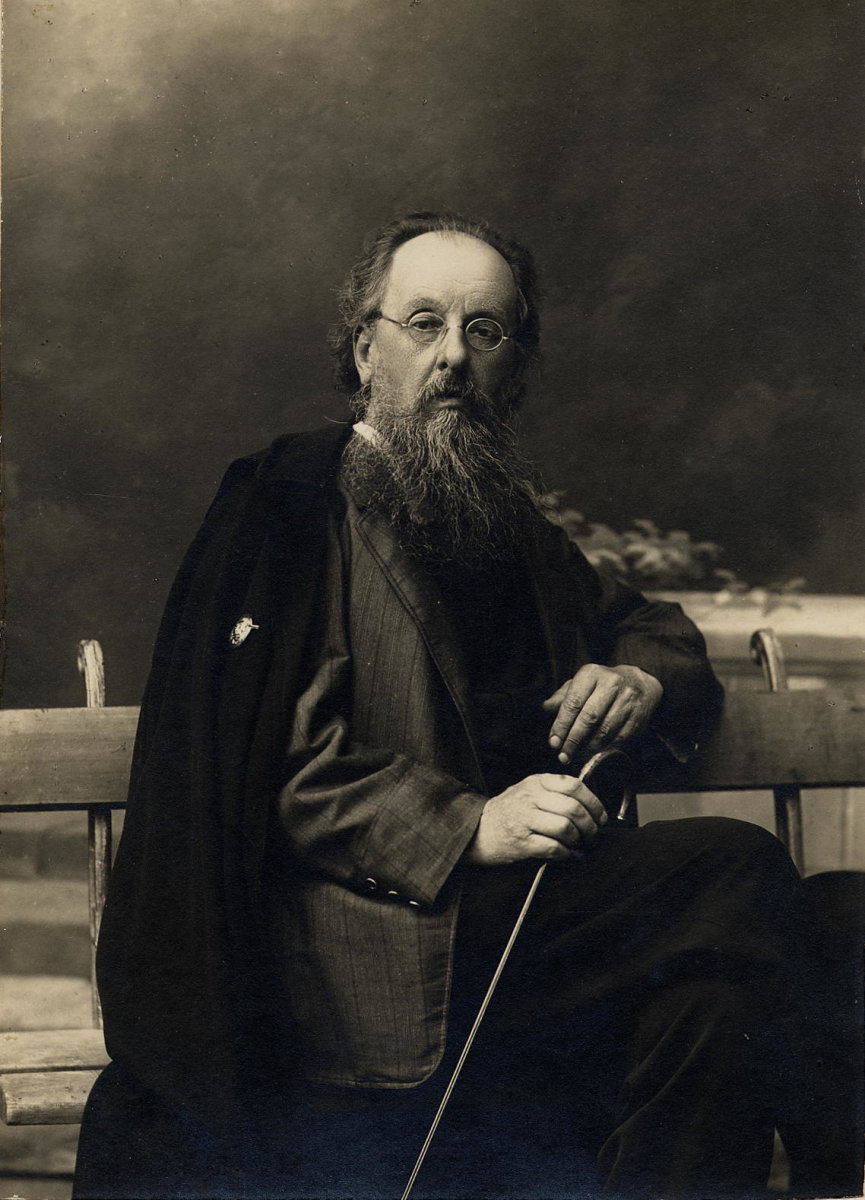
Konstantin Tsiolkovsky

Izhevskoye (Ryazan), Russian Empire
Archival Overview
Russian visionary schoolteacher and aerospace theorist acclaimed as the 'Father of Theoretical Astronautics', who derived the Tsiolkovsky Rocket Equation and conceived multi-stage rockets, space stations, and airlocks.
Biographical Record
Konstantin Tsiolkovsky (1857–1935) was left almost completely deaf by childhood scarlet fever and educated himself in the Chertkov Library in Moscow. Living in modest obscurity as a mathematics teacher in Kaluga, he built Russia's first wind tunnel in his apartment to test aerodynamic shapes.
In his 1903 treatise 'The Exploration of Cosmic Space by Means of Reaction Devices', Tsiolkovsky mathematically proved that only rocket propulsion could overcome Earth's gravity in a vacuum, deriving the fundamental rocket equation: delta-v = v_e * ln(m0/mf). He designed liquid oxygen/hydrogen rockets and envisioned space colonies.
Key Life Milestones
Derivation of the Tsiolkovsky Rocket Equation
Published the foundational mathematical equation governing all human spaceflight and rocket propulsion.
Concept of Multi-Stage Space Rocket Trains
Formulated the concept of staging rockets to achieve orbital velocity, the architecture of modern space exploration.
Memorial Guestbook & Tributes
0 messages recordedLeave a Respectful Tribute
Final Resting Place
Perpetual MemorialKaluga, Russia