 Kingdom of Prussia
•
2 views
Kingdom of Prussia
•
2 views
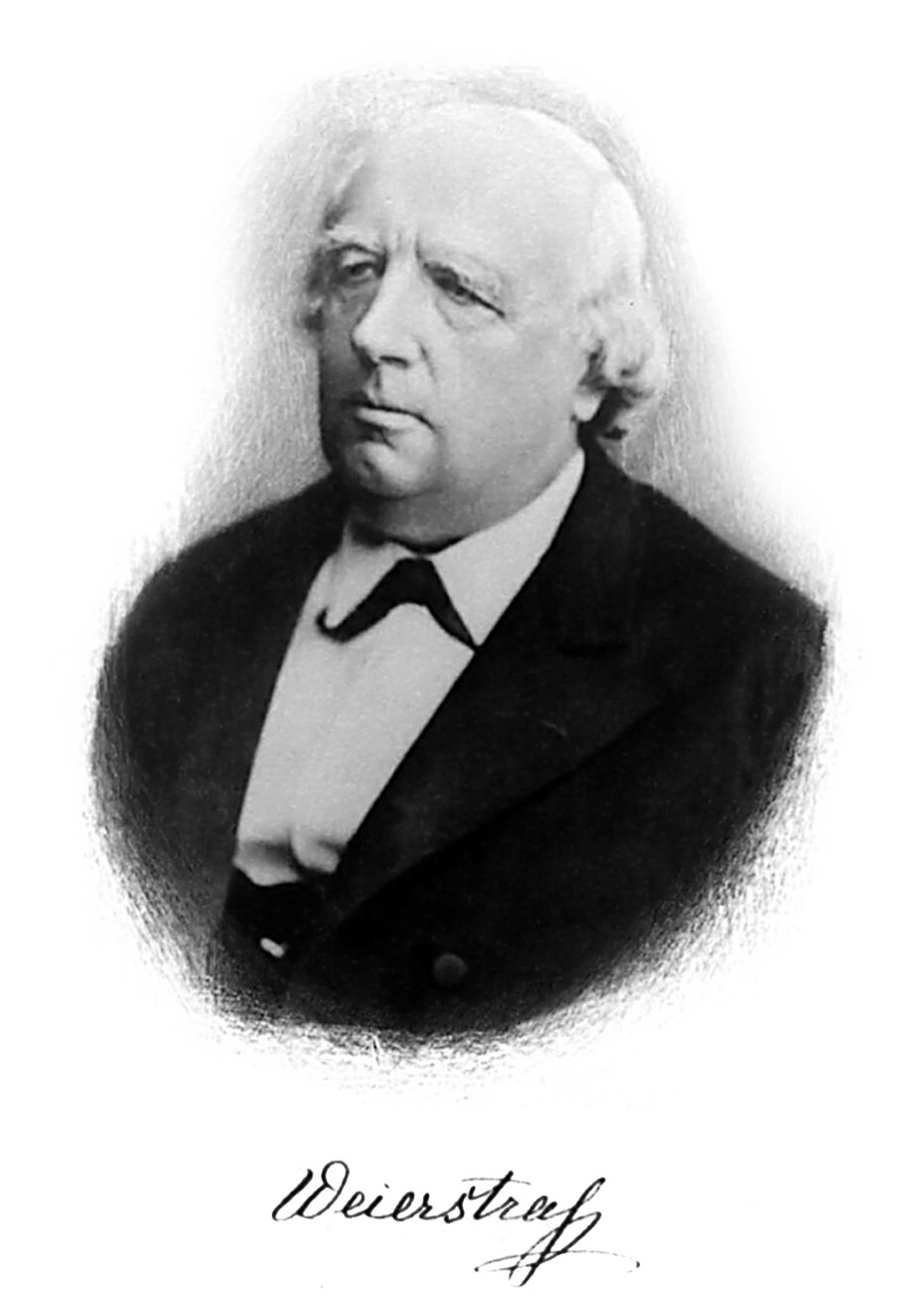
Karl Weierstrass

Ostenfelde, Kingdom of Prussia
Archival Overview
German mathematician universally celebrated as the father of modern analysis, who established the epsilon-delta definitions of limits and continuity and discovered continuous nowhere-differentiable functions.
Biographical Record
Karl Weierstrass (1815–1897) spent nearly fifteen years teaching elementary school while conducting solitary mathematical research at night. In the 1850s, his papers on Abelian functions catapulted him directly into a professorship at the University of Berlin.
Weierstrass eradicated fuzzy infinitesimals from calculus, formulating the rigorous (epsilon, delta) definitions of limit and continuity used ever since. In 1872, he shocked the mathematical world by constructing the Weierstrass function—a continuous function that is nowhere differentiable.
Key Life Milestones
Epsilon-Delta Definition of Limits
Formulated the modern rigorous standard for continuity and limits in real analysis.
Continuous Nowhere-Differentiable Function
Constructed the first pathological fractal function, shattering classical geometric intuition.
Memorial Guestbook & Tributes
0 messages recordedLeave a Respectful Tribute
Final Resting Place
Perpetual MemorialBerlin, Germany