 Austria-Hungary
•
0 views
Austria-Hungary
•
0 views
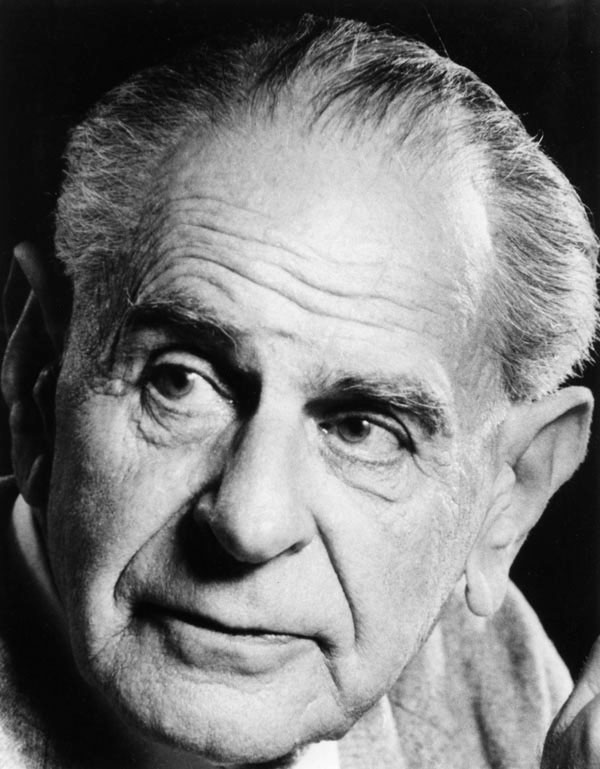
Karl Popper

Vienna, Austria-Hungary
Archival Overview
Austrian-British philosopher who revolutionized the philosophy of science with the criterion of falsifiability in The Logic of Scientific Discovery and defended democracy in The Open Society and Its Enemies.
Biographical Record
Born in Vienna, Karl Popper (1902–1994) rejected the logical positivists' verificationism in 'Logik der Forschung' (1934), demonstrating that scientific theories can never be verified by induction, but can only be demarcated by whether they are falsifiable and open to empirical refutation.
Exiled to New Zealand during World War II, Popper penned 'The Open Society and Its Enemies' (1945), launching a searing critique of Plato, Hegel, and Marx as architects of totalitarian historicism, while championing liberal democracy, piecemeal social engineering, and fallibilism. He taught at the London School of Economics.
Key Life Milestones
The Logic of Scientific Discovery (Logik der Forschung)
Formulated falsifiability as the demarcation criterion between science and non-science.
The Open Society and Its Enemies
Published his two-volume defense of liberal democracy against totalitarian historicist philosophies.
Memorial Guestbook & Tributes
0 messages recordedLeave a Respectful Tribute
Final Resting Place
Perpetual MemorialVienna, Austria