 United States
•
4,080 views
United States
•
4,080 views
Karl Jansky

Norman, Oklahoma, United States
Archival Overview
American radio engineer who founded radio astronomy by discovering radio emission from the center of the Milky Way.
Biographical Record
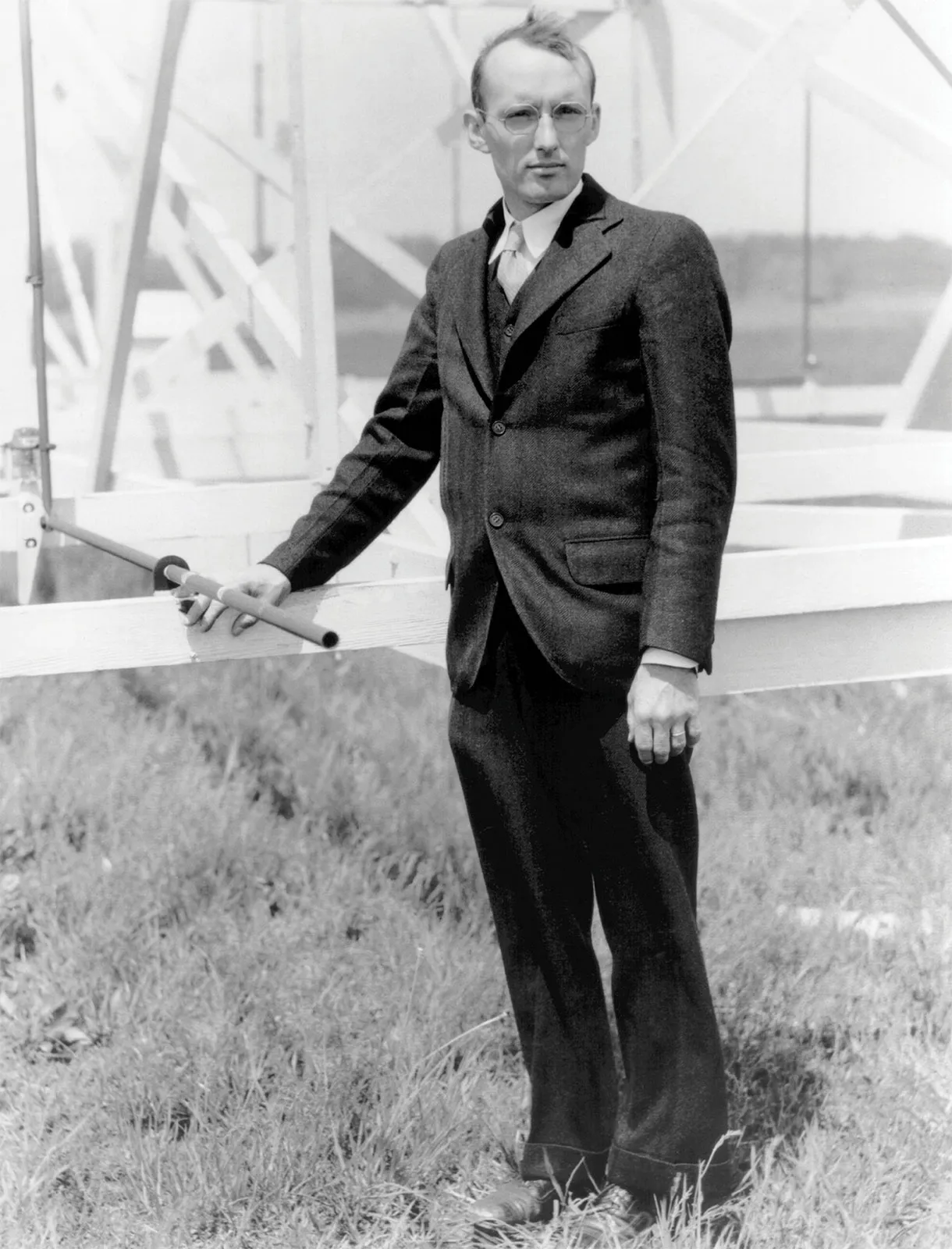
Karl Guthe Jansky was an American radio engineer and physicist who inadvertently opened a revolutionary new window on the universe, creating the science of radio astronomy. Employed by Bell Telephone Laboratories in Holmdel, New Jersey, Jansky was tasked with investigating sources of static interference that might disrupt transatlantic commercial radiotelephone transmissions.
To study this, he constructed a massive 100-foot-long rotating directional antenna mounted on Model T Ford wheels, affectionately known as 'Jansky's Merry-Go-Round'. By 1932, after ruling out local thunderstorms, Jansky detected a steady, faint hiss whose signal peaked once every 23 hours and 56 minutes—a sidereal day. He realized the radio noise was not of terrestrial or solar origin, but was emanating from the heart of the Milky Way in the constellation Sagittarius. Although Bell Labs reassigned him before he could pursue astrophysics, Jansky's discovery spawned radio astronomy. The fundamental unit of radio flux density, the jansky (Jy), commemorates his triumph.
Key Life Milestones
Detection of Cosmic Radio Emission
Discovered that a mysterious persistent radio hiss originated from the center of the Milky Way, founding radio astronomy.
Front-Page New York Times Acclaim
Published his conclusive findings linking radio signals to interstellar space, generating global scientific fascination.
Memorial Guestbook & Tributes
0 messages recordedLeave a Respectful Tribute
Final Resting Place
Perpetual MemorialAlma, Nebraska, United States