 Electorate of Brunswick-Lüneburg, Holy Roman Empire
•
2 views
Electorate of Brunswick-Lüneburg, Holy Roman Empire
•
2 views
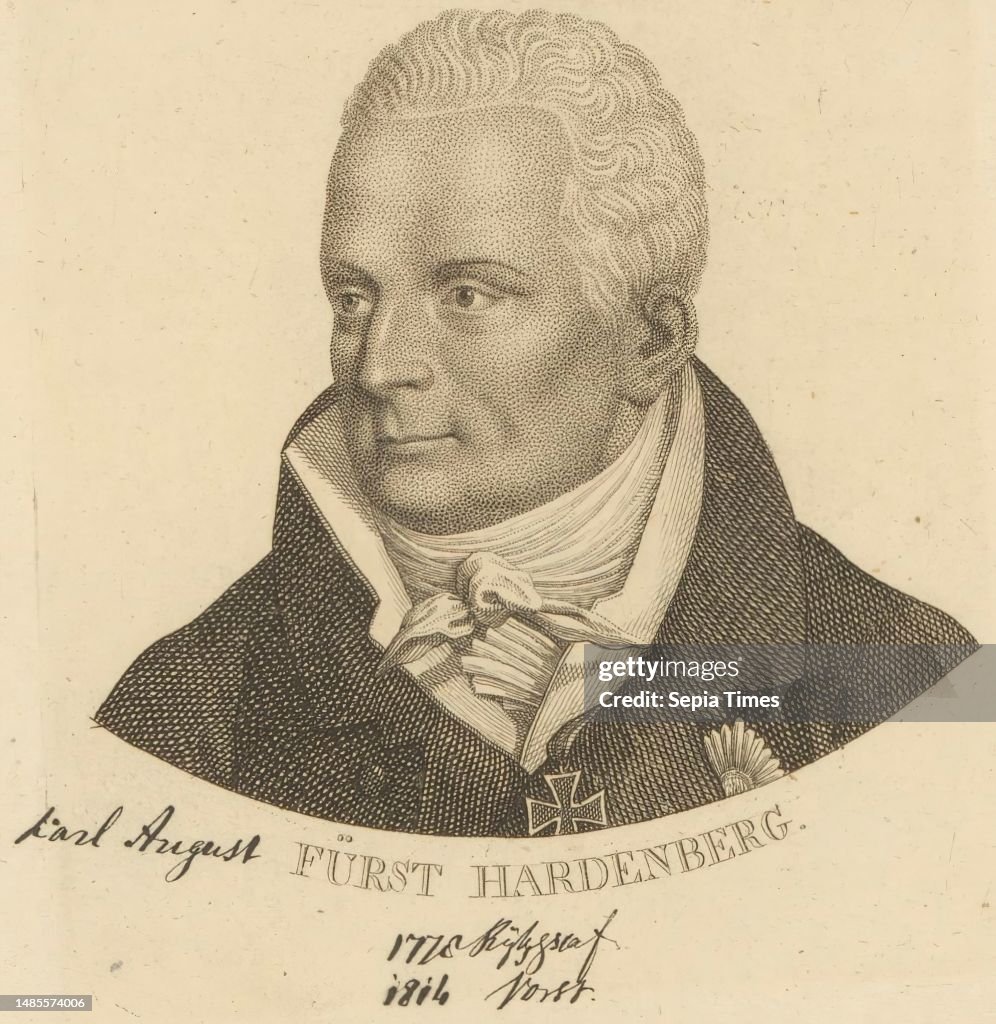
Karl August von Hardenberg

Essenrode, Electorate of Brunswick-Lüneburg, Holy Roman Empire
Archival Overview
Prussian Chancellor who modernized the Prussian state through the Stein-Hardenberg Reforms, emancipated Jewish citizens, and represented Prussia at the Congress of Vienna.
Biographical Record
Karl August, Prince von Hardenberg (1750–1822) was a Prussian statesman and State Chancellor who was the chief administrative modernizer of Prussia during the Napoleonic era. Educated at Göttingen and Leipzig, Hardenberg served in Hanover and Brunswick before entering Prussian service in 1791, administering the principalities of Ansbach and Bayreuth.
Following Prussia's crushing defeat by Napoleon at Jena-Auerstedt, Hardenberg authored the 1807 Riga Memorandum on state modernization. Appointed Chancellor in 1810, he drove the Stein-Hardenberg Reforms: abolishing feudal guild monopolies, secularizing church property, reforming taxation, and issuing the landmark 1812 Edict of Emancipation granting citizenship and civil rights to Prussian Jews. Alongside Wilhelm von Humboldt, he represented Prussia at the Congress of Vienna (1814–1815), securing the rich Rhineland and Westphalia territories that laid the foundation for German industrialization.
Key Life Milestones
State Chancellor of Prussia
Appointed State Chancellor by King Frederick William III, implementing free enterprise and abolishing feudal trade privileges.
Edict of Jewish Emancipation
Promulgated the historic Edict of Emancipation, granting full Prussian citizenship, freedom of residence, and occupational rights to Jews.
Memorial Guestbook & Tributes
0 messages recordedLeave a Respectful Tribute
Final Resting Place
Perpetual MemorialNeuhardenberg (Brandenburg), Germany