 India
•
2 views
India
•
2 views
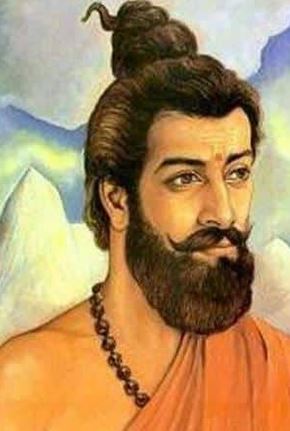
Kanada

Prabhas Patan (Gujarat), India
Archival Overview
Ancient Indian sage and natural philosopher who founded the Vaisheshika philosophical school and formulated the earliest known atomic theory of matter, defining the indestructible atom (Parmanu) and laws of motion.
Biographical Record
Kanada (c. 6th century BCE), also known as Kashyapa, earned his name (meaning 'atom-eater' or 'grain-gatherer') by living an ascetic life collecting grains dropped in fields after harvest. In his 'Vaisheshika Sutra', he formulated an empirical ontology categorizing everything in the universe into six categories (Padarthas).
Centuries before Democritus and Leucippus, Kanada proposed that all physical matter is composed of eternal, indivisible, infinitesimal spherical particles called 'Parmanu' (atoms). He described how pairs of atoms combine into di-atomic molecules (Dvyanuka) and triplets (Tryanuka) under gravitational and heat forces, creating visible physical reality.
Key Life Milestones
Composition of the Vaisheshika Sutras
Codified the six categories of reality and the atomic nature of the four physical elements.
Formulation of the Laws of Motion and Causality
Defined mechanical force (Vega), gravity (Gurutva), and atomic chemical change through heat.
Memorial Guestbook & Tributes
0 messages recordedLeave a Respectful Tribute
Final Resting Place
Perpetual MemorialPrabhas Patan (Gujarat), India