 Landgraviate of Hesse-Darmstadt (Germany)
•
1,829 views
Landgraviate of Hesse-Darmstadt (Germany)
•
1,829 views
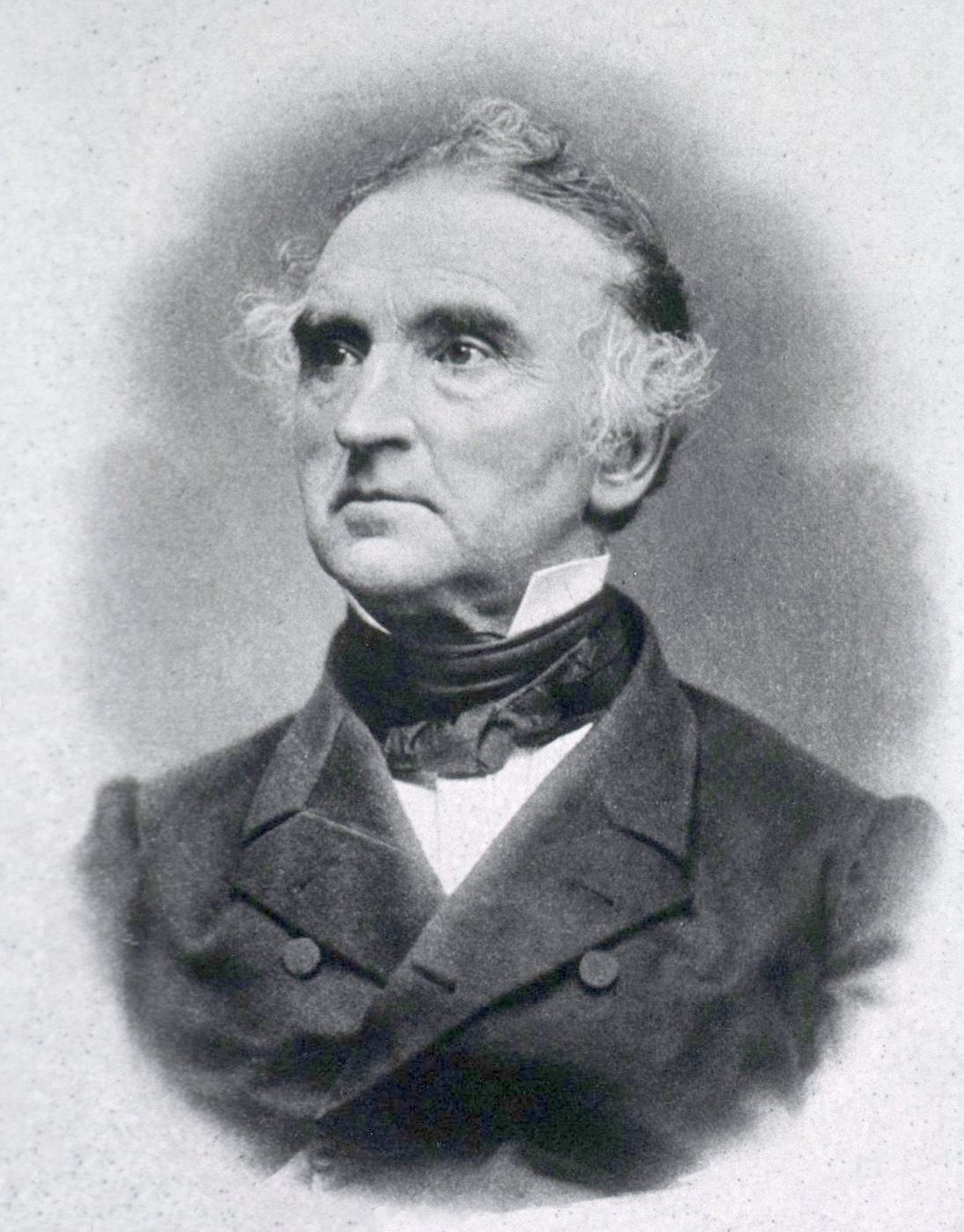
Justus von Liebig

Darmstadt, Hesse, Landgraviate of Hesse-Darmstadt (Germany)
Archival Overview
German chemist celebrated as the 'father of the fertilizer industry' who formulated Liebig's law of the minimum and invented the Liebig condenser.
Biographical Record
Justus Freiherr von Liebig was a German chemist whose transformative pedagogy and application of chemistry to agriculture and biology reshaped the modern world. Having witnessed severe famine during the 'Year Without a Summer' (1816) as a boy, Liebig studied in Paris under Joseph Louis Gay-Lussac before becoming professor at the University of Giessen, where he created the world's first modern teaching laboratory for student research.
In 1840, Liebig published Organic Chemistry in its Applications to Agriculture and Physiology. Disproving the humus theory, he demonstrated that plants nourish themselves on inorganic minerals—principally nitrogen, phosphorus, and potassium (NPK)—founding the modern agricultural fertilizer industry. He formulated Liebig's law of the minimum, showing that plant growth is dictated not by total resources, but by the scarcest nutrient. He also invented the Liebig condenser used in distillation laboratories worldwide, devised a method for silvering glass mirrors, and formulated beef bouillon extract (Liebig Extract of Meat Company).
Key Life Milestones
Invention of the Kaliapparat
Invented the five-bulb potash apparatus allowing rapid, precise organic elemental combustion analysis of carbon and hydrogen.
Agricultural Chemistry & Law of the Minimum
Published his agricultural chemistry treatise establishing mineral plant nutrition and founding commercial synthetic fertilizers.
Memorial Guestbook & Tributes
0 messages recordedLeave a Respectful Tribute
Final Resting Place
Perpetual MemorialMunich, Bavaria, Germany