 Roman Empire (Turkey)
•
3 views
Roman Empire (Turkey)
•
3 views
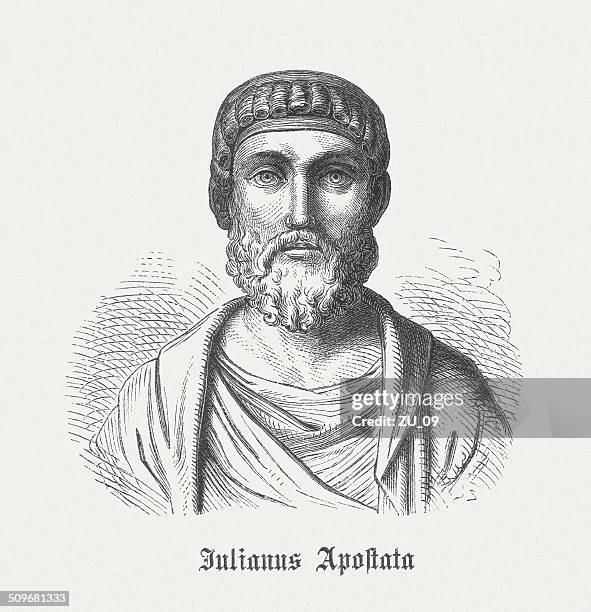
Julian (Julian the Apostate)

Constantinople, Roman Empire (Turkey)
Archival Overview
Roman Emperor, intellectual, and philosopher-general who was the last non-Christian ruler of the Roman Empire.
Biographical Record
Flavius Claudius Julianus, remembered in Christian history as 'Julian the Apostate' and to classical scholars as Julian the Philosopher, was the last pagan emperor of Rome. A nephew of Constantine the Great, Julian survived brutal family purges as a child and immersed himself secretly in Neoplatonist philosophy, Greek literature, and mystery religions in Athens and Pergamon.
Dispatched to Gaul as Caesar in 355 CE with zero military training, Julian stunned Europe by displaying tactical brilliance, driving back Germanic Alemanni tribes at the Battle of Strasbourg. Proclaimed Augustus by his devoted legionaries in Paris in 360 CE, Julian assumed sole rule and promulgated universal religious tolerance, stripping the Christian Church of its state subsidies and attempting to revitalize traditional Hellenic paganism. An eloquent writer who penned satires and philosophical treatises, Julian launched a grand campaign into Mesopotamia against Shapur II's Sasanian Empire. Struck by a spear during a cavalry skirmish near the Tigris at age thirty-one, his dying words were mythologized by church chroniclers as: 'Vicisti, Galilaee' ('Thou hast conquered, O Galilean').
Key Life Milestones
Victory at the Battle of Strasbourg
Imperial Restoration of Hellenic Pluralism
Memorial Guestbook & Tributes
0 messages recordedLeave a Respectful Tribute
Final Resting Place
Perpetual MemorialConstantinople (Istanbul), Turkey