 Italy
•
7 views
Italy
•
7 views
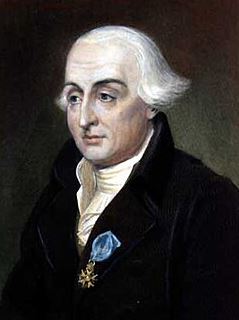
Joseph-Louis Lagrange

Turin (Piedmont), Italy
Archival Overview
Italo-French mathematical colossus whose Mécanique analytique transformed mechanics into pure analysis without diagrams, invented the calculus of variations, and discovered Lagrange points.
Biographical Record
Joseph-Louis Lagrange (1736–1813), born in Turin of Franco-Italian heritage, became professor of mathematics at age nineteen. Recommended by Euler, he succeeded him as Director of Mathematics at the Berlin Academy for twenty years under Frederick the Great before moving to Paris under Louis XVI and later serving as imperial senator under Napoleon.
In his 1788 masterpiece Mécanique analytique, Lagrange unified all classical mechanics under the principle of virtual work and the calculus of variations, boasting in the preface that 'no diagrams will be found in this work'. In celestial mechanics, he solved the three-body problem by discovering the five equilibrium gravitational positions: the Lagrange Points (L1 to L5), where space telescopes like the James Webb Telescope operate today.
Key Life Milestones
Discovery of the Five Lagrange Equilibrium Points
Identified the five gravitational equilibrium points in celestial mechanics in his essay on the three-body problem.
Publication of 'Mécanique analytique'
Systematized all mechanics into generalized coordinates and variational calculus, founding Lagrangian mechanics.
Memorial Guestbook & Tributes
0 messages recordedLeave a Respectful Tribute
Final Resting Place
Perpetual MemorialParis, France