 Kingdom of France
•
2,761 views
Kingdom of France
•
2,761 views
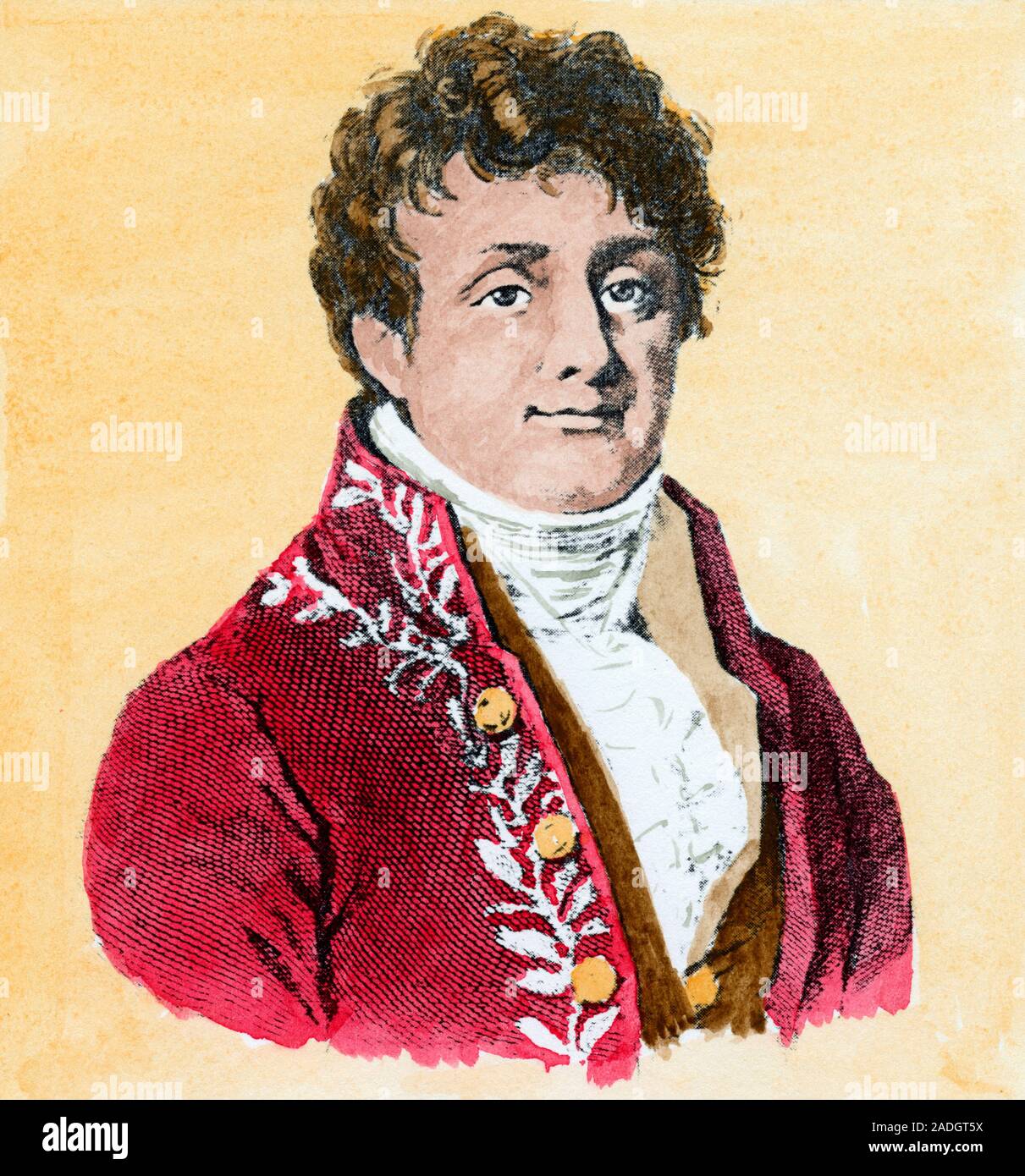
Joseph Fourier

Auxerre, Burgundy, Kingdom of France
Archival Overview
French mathematician and physicist who created Fourier analysis for heat transfer and discovered the greenhouse effect.
Biographical Record
Jean-Baptiste Joseph Fourier was a French mathematician, physicist, and administrator whose mathematical innovations underpin all modern digital signal processing, acoustics, and optics. An orphan of modest tailor origin in Auxerre, Fourier rose during the French Revolution to accompany Napoleon Bonaparte on his 1898 expedition to Egypt, serving as governor of Lower Egypt and secretary of the Institut d'Égypte.
In 1822, Fourier published his landmark treatise Théorie analytique de la chaleur (Analytical Theory of Heat). To solve the partial differential equation governing heat diffusion, he proved that any arbitrary periodic function—no matter how complex or discontinuous—can be represented as an infinite sum of simple trigonometric sines and cosines, establishing Fourier series and the Fourier transform. In the 1820s, Fourier also calculated that the Earth should be much colder given its distance from the sun, discovering that the atmosphere retains infrared radiation—the very first scientific description of the planetary greenhouse effect.
Key Life Milestones
Analytical Theory of Heat
Published his revolutionary treatise introducing Fourier analysis and the mathematical laws of thermal conduction.
Discovery of the Greenhouse Effect
Published thermodynamic calculations showing Earth's atmosphere insulates the planet against solar radiation loss.
Memorial Guestbook & Tributes
0 messages recordedLeave a Respectful Tribute
Final Resting Place
Perpetual MemorialParis, France