 United States
•
2 views
United States
•
2 views
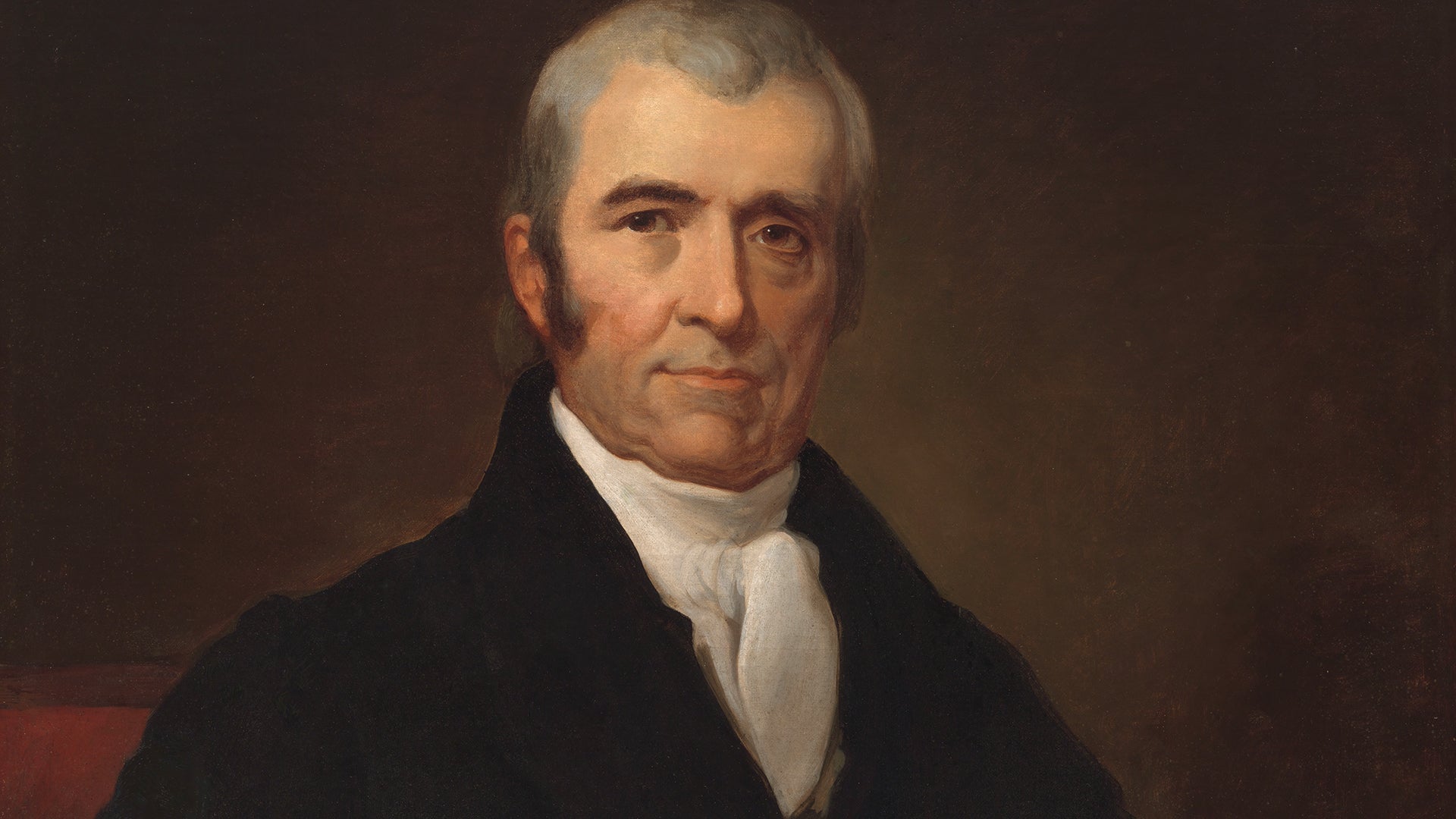
John Marshall

Germantown, Virginia, United States
Archival Overview
Fourth Chief Justice of the United States who served for thirty-four years, established the principle of judicial review in Marbury v. Madison, and made the Supreme Court a co-equal branch.
Biographical Record
John Marshall (1755–1835) was an American Founding Father, statesman, and the fourth Chief Justice of the United States, serving from 1801 until his death in 1835. A Revolutionary War officer who endured Valley Forge alongside George Washington, Marshall studied law at William & Mary under George Wythe, serving as a Virginia delegate, congressman, and Secretary of State under John Adams.
Appointed Chief Justice in 1801, Marshall transformed the Supreme Court into a vigorous, co-equal branch of the federal government. In his foundational opinion in Marbury v. Madison (1803), he established judicial review—the power of courts to strike down unconstitutional congressional legislation. In landmark decisions like McCulloch v. Maryland (1819) and Gibbons v. Ogden (1824), he articulated a broad construction of federal commerce power and constitutional supremacy that unified the national economy.
Key Life Milestones
Marbury v. Madison Ruling
Authored the unanimous opinion establishing the doctrine of judicial review, cementing the Supreme Court as the final arbiter of the Constitution.
McCulloch v. Maryland Decision
Upheld the constitutionality of the Second Bank of the United States, affirming implied powers: 'the power to tax involves the power to destroy'.
Memorial Guestbook & Tributes
0 messages recordedLeave a Respectful Tribute
Final Resting Place
Perpetual MemorialRichmond, Virginia, United States