 Great Britain
•
11 views
Great Britain
•
11 views
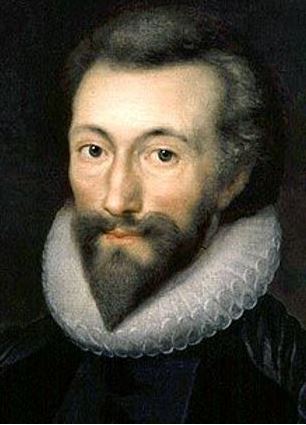
John Donne

Bread Street (London), Great Britain
Archival Overview
Foremost English metaphysical poet and Dean of St Paul's whose passionate erotic elegies, complex extended conceits, and profound Holy Sonnets gave English literature 'No man is an island' and 'Death, be not proud'.
Biographical Record
John Donne (1572–1631), born into a persecuted Roman Catholic family during the Elizabethan era, studied at Oxford and Cambridge without receiving a degree due to his refusal to take the Oath of Supremacy. In his youth, as a worldly rake and law student at Lincoln's Inn, he penned sparkling, sensual love elegies and satires celebrating erotic intimacy (*Songs and Sonnets*).
His secret marriage to Ann More in 1601 caused his dismissal from court and imprisonment ('John Donne, Anne Donne, Un-done'). Converting to the Church of England, he was ordained in 1615 and became Dean of St Paul's Cathedral in 1621, famed as England's most eloquent preacher. In his Holy Sonnets and Devotions upon Emergent Occasions (1624), he channeled metaphysical passion into cosmic meditation, penning the immortal reflection: 'No man is an island, entire of itself; every man is a piece of the continent... therefore never send to know for whom the bell tolls; it tolls for thee.'
Key Life Milestones
Publication of Devotions upon Emergent Occasions
Published his meditations during mortal sickness, introducing 'No man is an island' and 'For whom the bell tolls'.
Posthumous Publication of Songs and Sonnets
Published his revolutionary metaphysical poetry, blending cerebral intellectual conceits with raw human emotion.
Memorial Guestbook & Tributes
0 messages recordedLeave a Respectful Tribute
Final Resting Place
Perpetual MemorialLondon, Great Britain