 Germany
•
9 views
Germany
•
9 views
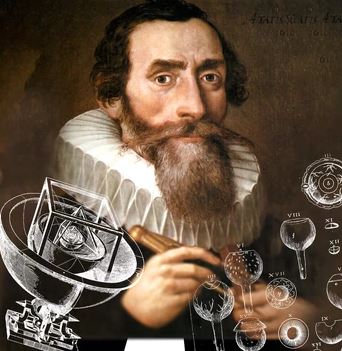
Johannes Kepler

Weil der Stadt (Swabia), Germany
Archival Overview
German astronomer and mathematician who discovered the three fundamental laws of planetary motion (elliptical orbits, equal areas in equal times, harmonic period-distance ratio).
Biographical Record
Johannes Kepler (1571–1630), studying theology at Tübingen, became an ardent Copernican before joining Tycho Brahe in Prague as Imperial Mathematician to Emperor Rudolf II. Inheriting Tycho's unparalleled decades of precision Mars observations, Kepler struggled for eight years to fit Mars into a circular orbit before realizing that planets move in ellipses.
In Astronomia Nova (1609) and Harmonices Mundi (1619), Kepler announced his Three Laws: (1) planets move in ellipses with the Sun at one focus; (2) a line joining planet and Sun sweeps equal areas in equal times; (3) the square of orbital period is proportional to the cube of semi-major axis. His laws provided the exact celestial mechanics that Isaac Newton later explained with universal gravity.
Key Life Milestones
Publication of 'Astronomia Nova'
Announced his first two laws of planetary motion: elliptical orbits and the law of equal areas.
Publication of 'Harmonices Mundi'
Discovered the Third Harmonic Law relating planetary orbital period to orbital distance.
Memorial Guestbook & Tributes
0 messages recordedLeave a Respectful Tribute
Final Resting Place
Perpetual MemorialRegensburg (Bavaria), Germany