 Germany
•
13 views
Germany
•
13 views
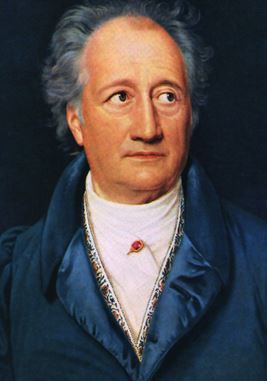
Johann Wolfgang von Goethe

Frankfurt am Main, Germany
Archival Overview
Supreme giant of German literature and European polymath whose epistolary novel The Sorrows of Young Werther launched Sturm und Drang, and whose life's masterwork Faust stands as the cosmic tragedy of modern humanity's striving soul.
Biographical Record
Johann Wolfgang von Goethe (1749–1832) was the central intellectual sun of Weimar Classicism and the German cultural golden age. In 1774, his epistolary novel Die Leiden des jungen Werthers (The Sorrows of Young Werther) ignited a worldwide sensation of romantic yearning (*Weltschmerz*), carried by Napoleon Bonaparte throughout his Egyptian campaigns.
Invited to Weimar in 1775 by Duke Karl August, Goethe served as prime minister, directed the ducal theater, and made pioneering scientific discoveries in plant morphology and optics (*Theory of Colours*). His literary crowning achievement, the two-part verse tragedy Faust (Part I in 1808, Part II in 1832), occupied him for sixty years. Centered on Dr. Faust's wager with Mephistopheles, Goethe articulated the concept of Weltliteratur (world literature) and the ceaseless striving (*Streben*) of the modern human spirit.
Key Life Milestones
Publication of The Sorrows of Young Werther
Published his breakout romantic epistolary novel, creating Europe's first modern literary bestseller.
Publication of Faust, Part One
Published the first part of Faust, creating the supreme tragedy and philosophical summit of German literature.
Memorial Guestbook & Tributes
0 messages recordedLeave a Respectful Tribute
Final Resting Place
Perpetual MemorialWeimar (Saxe-Weimar-Eisenach), Germany