 France
•
12 views
France
•
12 views
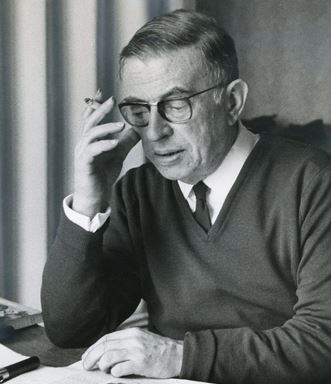
Jean-Paul Sartre

Paris, France
Archival Overview
Foremost figure of 20th-century French existentialism whose Being and Nothingness proclaimed that 'existence precedes essence' and that human beings are radical agents condemned to be free.
Biographical Record
Jean-Paul Sartre (1905–1980) was the towering public intellectual of post-World War II Europe. Leading the French existentialist movement from the cafés of Saint-Germain-des-Prés alongside his lifelong intellectual companion Simone de Beauvoir, he founded the influential journal Les Temps Modernes.
His philosophical magnum opus, Being and Nothingness (1943), established that for human beings, 'existence precedes essence': we are not defined by any pre-existing blueprint, but create ourselves through choice and action. Awarded the Nobel Prize in Literature in 1964, he famously declined it, refusing to be institutionalized by official honors.
Key Life Milestones
Publication of 'Being and Nothingness' (L'Être et le Néant)
Published his defining existentialist treatise analyzing human consciousness (pour-soi) and radical bad faith.
The Lecture 'Existentialism Is a Humanism'
Delivered his celebrated public defense in Paris, demonstrating that existentialism is an ethic of engagement and responsibility.
Memorial Guestbook & Tributes
0 messages recordedLeave a Respectful Tribute
Final Resting Place
Perpetual MemorialParis, France