 Belgium
•
8 views
Belgium
•
8 views
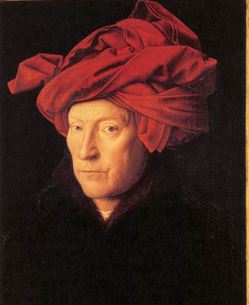
Jan van Eyck

Maaseik (Limburg), Belgium
Archival Overview
Greatest master of Early Netherlandish painting who perfected the oil painting technique, celebrated worldwide for the Ghent Altarpiece and the Arnolfini Portrait with its astonishing microscopic realism.
Biographical Record
Jan van Eyck (c. 1390–1441) served as court painter and confidential diplomat to Philip the Good, Duke of Burgundy. Although not the literal inventor of oil paint, Van Eyck revolutionized the medium by utilizing slow-drying linseed and walnut oils applied in translucent glazes, achieving unprecedented luminosity, rich color saturation, and microscopic naturalism.
His supreme masterpiece, the Ghent Altarpiece (completed with his brother Hubert in 1432 for Saint Bavo Cathedral), is a polyptych of staggering complexity and religious majesty. In the Arnolfini Portrait (1434), his mastery of ambient light, fabric textures, and the famous convex mirror displaying the artist's signature 'Johannes de eyck fuit hic' redefined portraiture forever.
Key Life Milestones
Completion of the Ghent Altarpiece (Adoration of the Mystic Lamb)
Unveiled the monumental 24-panel polyptych at Saint Bavo Cathedral, crowning Early Netherlandish art.
Painting of the Arnolfini Portrait
Completed the iconic oil masterpiece displaying revolutionary light reflection in a convex mirror.
Memorial Guestbook & Tributes
0 messages recordedLeave a Respectful Tribute
Final Resting Place
Perpetual MemorialBruges, Belgium