 Dutch Republic
•
2 views
Dutch Republic
•
2 views
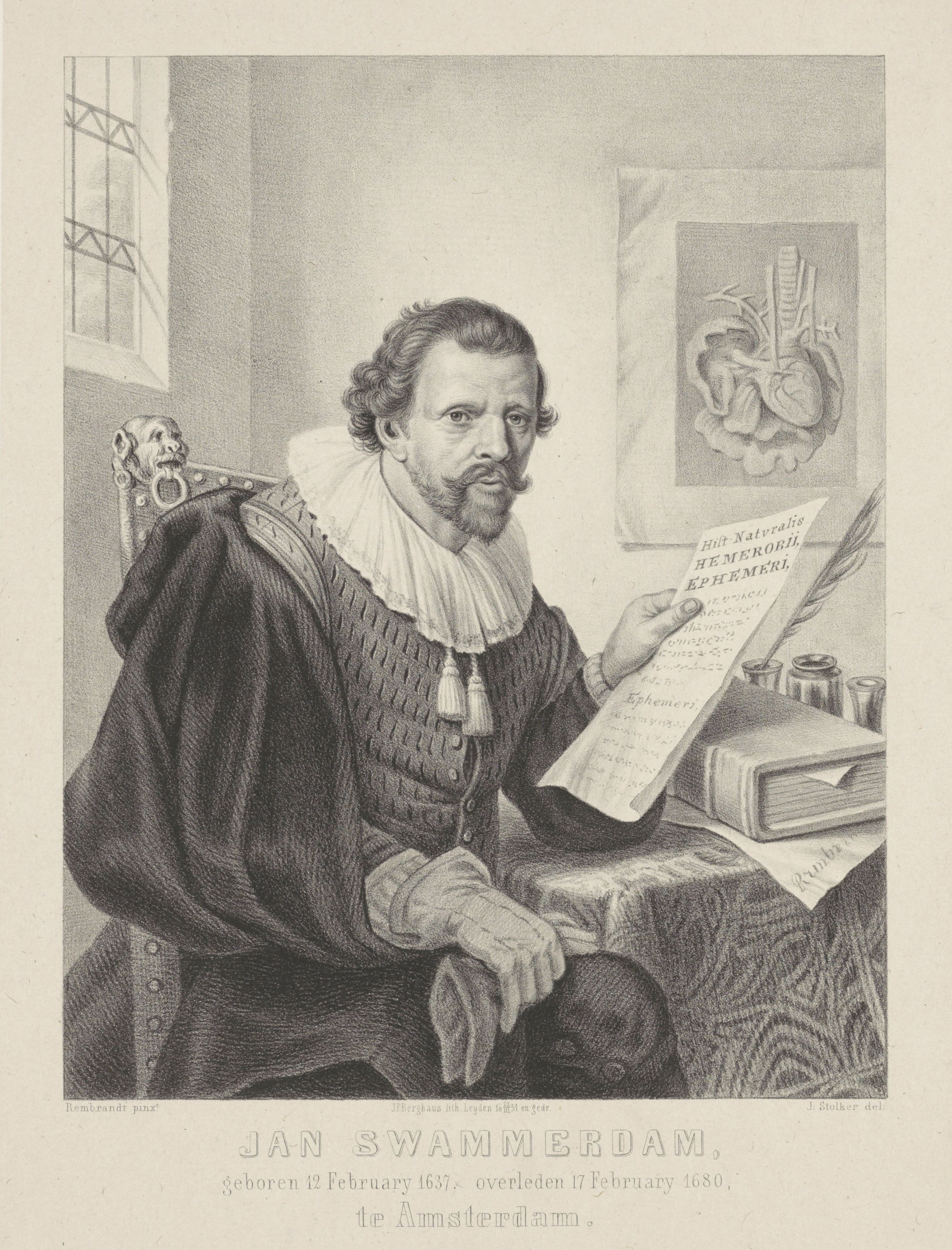
Jan Swammerdam

Amsterdam, Dutch Republic
Archival Overview
Dutch pioneer of microscopic anatomy who discovered red blood cells in 1658, proved that muscles contract without changing volume, and revolutionized zoology by disproving spontaneous generation and classifying insect metamorphosis.
Biographical Record
Jan Swammerdam (1637–1680) possessed superhuman dexterity with micro-dissection needles, microscopes, and fine glass capillary tubes. In 1658, examining the blood of a frog under magnification, he became the first human being to observe and describe red blood cells.
Swammerdam pioneered neuromuscular physiology by placing isolated frog muscle in a glass syringe with a water droplet, proving that muscle contraction occurs through mechanical shape alteration rather than animal spirits flowing into the muscle. His posthumous masterwork 'Biblia Naturae' (Book of Nature) established modern entomology.
Key Life Milestones
First Observation of Red Blood Cells
Observed and described oval red blood corpuscles in frog blood under the microscope.
Publication of the General Theory of Insects
Proved that insects do not generate spontaneously from decay but develop through four distinct metamorphosis stages.
Memorial Guestbook & Tributes
0 messages recordedLeave a Respectful Tribute
Final Resting Place
Perpetual MemorialAmsterdam, Netherlands