 United Kingdom
•
2,597 views
United Kingdom
•
2,597 views
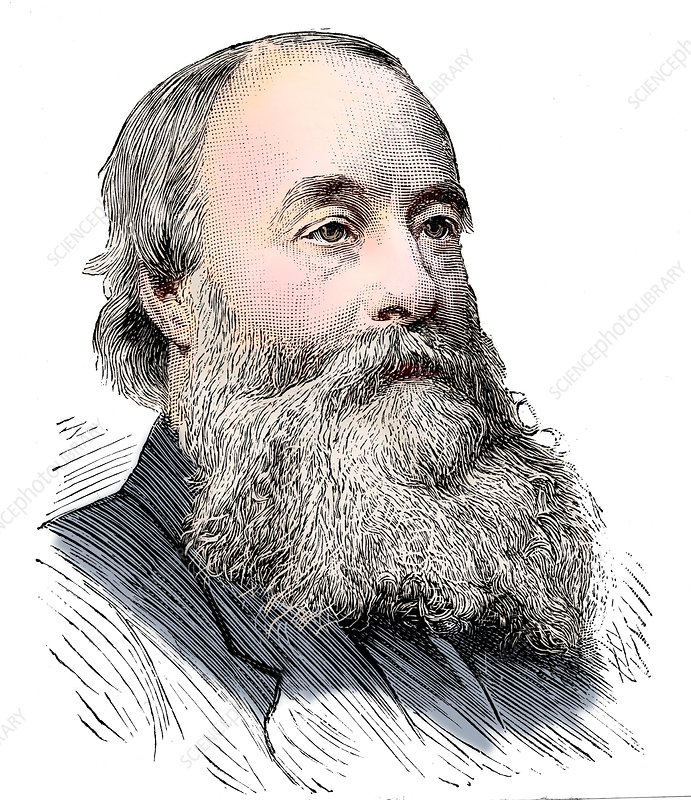
James Prescott Joule

Salford, Lancashire, United Kingdom
Archival Overview
English physicist and brewer whose precise measurements established the mechanical equivalent of heat and conservation of energy.
Biographical Record
James Prescott Joule was an English physicist and brewer whose obsession with thermometric precision shattered the long-dominant 'caloric' theory of heat and forged the first law of thermodynamics. Tutored as a youth by John Dalton, Joule managed the family brewery in Salford while constructing meticulous experimental laboratories in his spare time.
In 1841, he discovered Joule's first law, proving that the heat generated in an electrical conductor is proportional to the resistance and the square of the current (Q = I²Rt). Subsequently, using his famous paddle-wheel apparatus—where falling weights stirred water in an insulated brass cylinder—Joule measured the exact mechanical equivalent of heat, demonstrating that mechanical work and thermal energy are interconvertible forms of a single universal entity: energy. His findings provided the empirical bedrock for the universal Law of Conservation of Energy. The SI unit of work and energy, the joule (J), immortalizes his name.
Key Life Milestones
Discovery of Joule's Law
Quantified the relationship between electric current, resistance, and the heat generated in an electric circuit.
The Mechanical Equivalent of Heat
Measured heat generated by mechanical friction using paddle-wheels, proving conservation of energy and dethroning caloric theory.
Memorial Guestbook & Tributes
0 messages recordedLeave a Respectful Tribute
Final Resting Place
Perpetual MemorialSale, Greater Manchester, United Kingdom