 Great Britain
•
23 views
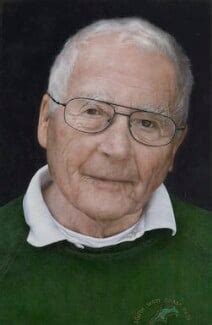
James Ephraim Lovelock

Letchworth, Great Britain
Archival Overview
Centenarian British independent biophysicist, inventor, and environmental thinker who formulated the revolutionary "Gaia hypothesis"—proposing that Earth functions as a self-regulating, living superorganism—and invented the electron capture detector.
Biographical Record
James Ephraim Lovelock was born in Letchworth Garden City, Hertfordshire. A lifelong independent scientist, he earned a chemistry degree from the University of Manchester and a PhD in medicine from the London School of Hygiene and Tropical Medicine in 1948, working for twenty years at the National Institute for Medical Research.
In 1957, Lovelock invented the electron capture detector (ECD), an extraordinarily sensitive device that detected minute chemical residues. In the late 1960s, using his ECD aboard a research vessel, he discovered the global persistence of chlorofluorocarbons (CFCs) in the atmosphere, providing the empirical foundation for Molina and Rowland's discovery of the ozone hole. In the 1970s, while consulting for NASA's Viking Mars mission, Lovelock collaborated with microbiologist Lynn Margulis to formulate the Gaia hypothesis: that living organisms interact with inorganic surroundings to form a synergistic, self-regulating complex system that maintains conditions for life on Earth. Appointed a Companion of Honour in 2003, Lovelock passed away on his 103rd birthday.
Key Life Milestones
Invention of the Electron Capture Detector
Invented the ECD device that enabled the measurement of trace pesticides and CFCs in the atmosphere, launching modern environmental science.
Publication of Gaia: A New Look at Life on Earth
Published his landmark book detailing the Gaia hypothesis, transforming ecological philosophy and Earth system science.
Memorial Guestbook & Tributes
0 messages recordedLeave a Respectful Tribute
Final Resting Place
Perpetual MemorialAbbotsbury, United Kingdom