 United States
•
4,311 views
United States
•
4,311 views
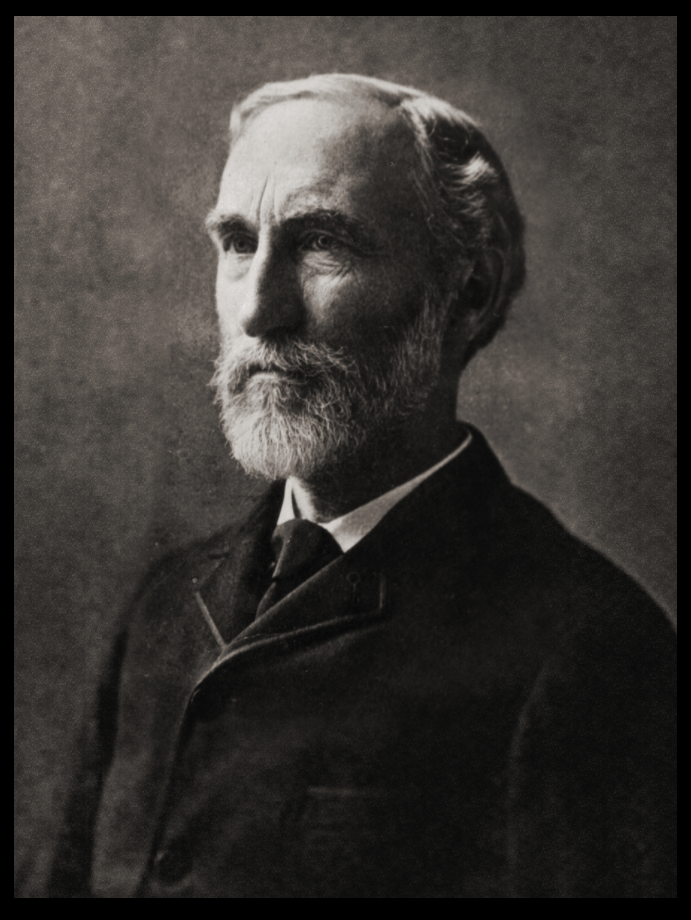
J. Willard Gibbs

New Haven, Connecticut, United States
Archival Overview
Foundational American mathematical physicist who created modern chemical thermodynamics and vector analysis.
Biographical Record
Josiah Willard Gibbs was an American mathematical physicist whose quiet, modest lifestyle at Yale University masked an intellect that revolutionized physical chemistry and statistical mechanics. After earning the first American engineering doctorate in 1863, Gibbs studied in Paris, Berlin, and Heidelberg before becoming professor of mathematical physics at Yale—serving without salary for his first nine years.
Between 1875 and 1878, Gibbs published his monumentally influential monograph On the Equilibrium of Heterogeneous Substances. In it, he united thermodynamics and chemistry, introducing fundamental concepts including chemical potential, the Gibbs phase rule, and free energy (now called Gibbs free energy, G), which determines whether chemical reactions occur spontaneously. Furthermore, Gibbs independently invented modern 3D vector analysis (dot and cross products) and coined the term 'statistical mechanics'. Albert Einstein called him 'the greatest mind in American history.'
Key Life Milestones
Equilibrium of Heterogeneous Substances
Published the seminal thermodynamic treatise introducing Gibbs free energy, chemical potential, and the phase rule.
Elementary Principles in Statistical Mechanics
Authored the foundational textbook establishing statistical mechanics as an overarching theoretical framework linking microphysics to thermodynamics.
Memorial Guestbook & Tributes
0 messages recordedLeave a Respectful Tribute
Final Resting Place
Perpetual MemorialNew Haven, Connecticut, United States