 United Kingdom
•
1 views
United Kingdom
•
1 views
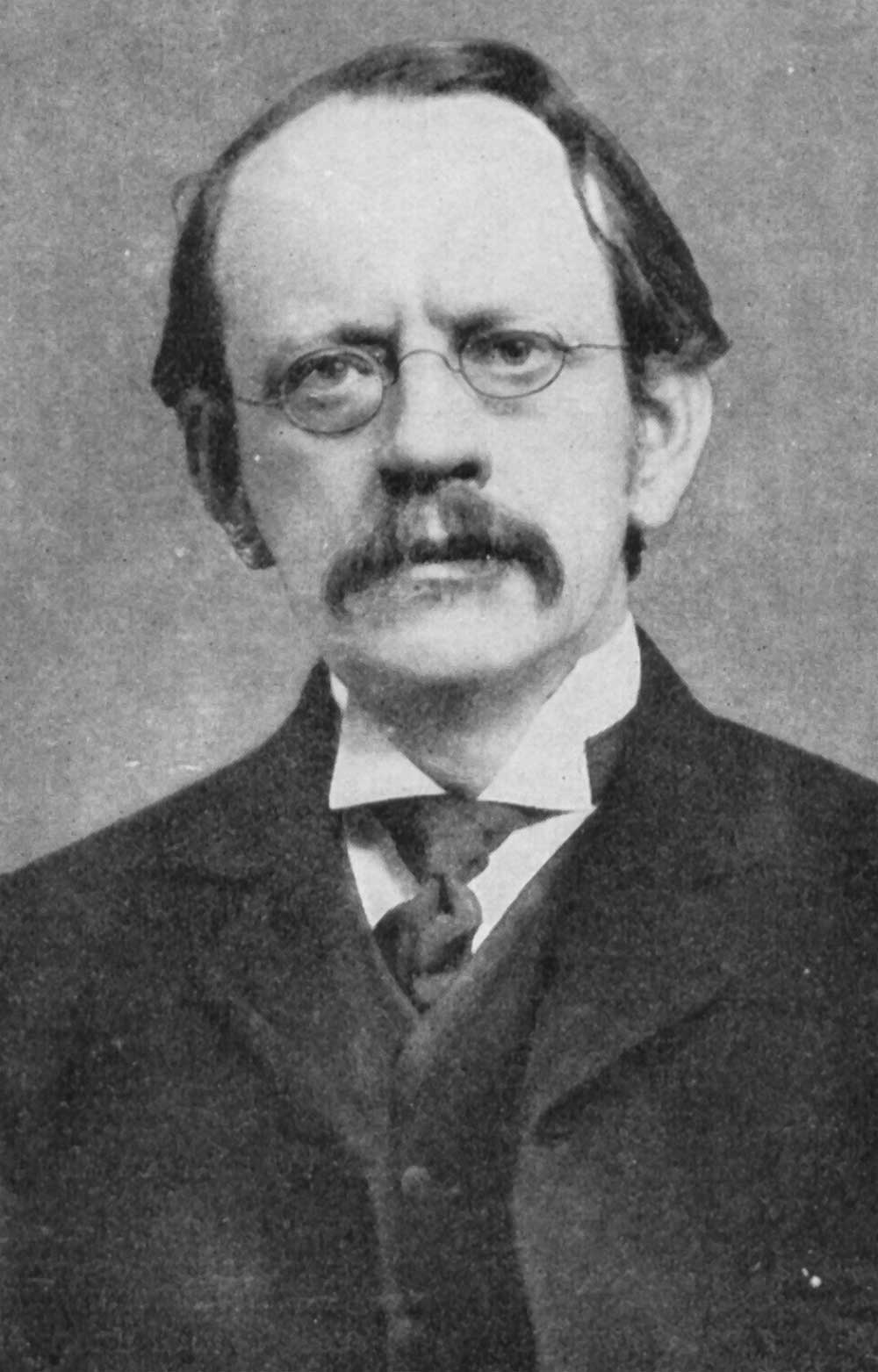
J. J. Thomson

Cheetham Hill (Manchester), United Kingdom
Archival Overview
English physicist who discovered the electron—the first subatomic particle ever identified—and invented mass spectrometry, winning the 1906 Nobel Prize in Physics.
Biographical Record
Joseph John Thomson (1856–1940) served as director of the Cavendish Laboratory at Cambridge University for thirty-five years. In 1897, through ingenious cathode ray deflection experiments in magnetic and electric fields, he proved that cathode rays were streams of negatively charged subatomic 'corpuscles' (electrons).
Thomson proposed the plum pudding atomic model and discovered stable non-radioactive isotopes using canal rays. Under his mentorship at Cavendish, eight of his research assistants (including Rutherford, Bragg, and Bohr) went on to win Nobel Prizes.
Key Life Milestones
Discovery of the Electron
Measured the mass-to-charge ratio of cathode ray corpuscles, discovering the first subatomic particle.
Nobel Prize in Physics
Awarded the Nobel Prize for theoretical and experimental investigations on conduction of electricity by gases.
Memorial Guestbook & Tributes
0 messages recordedLeave a Respectful Tribute
Final Resting Place
Perpetual MemorialLondon, United Kingdom