 India
•
1 views
India
•
1 views
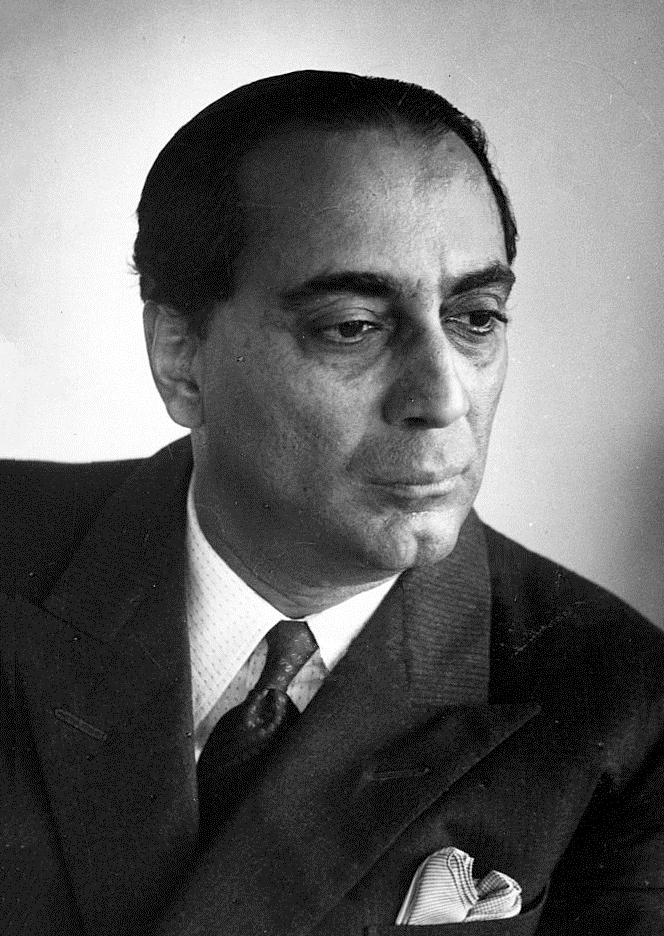
Homi J. Bhabha

Bombay, India
Archival Overview
Visionary Indian nuclear physicist acclaimed as the 'Father of the Indian Nuclear Programme', who formulated the relativistic electron-positron scattering formula (Bhabha Scattering) and designed India's three-stage nuclear power strategy.
Biographical Record
Homi Jehangir Bhabha (1909–1966) conducted cutting-edge quantum physics at Cambridge's Cavendish Laboratory alongside Ernest Rutherford and Niels Bohr. In 1935, he published the definitive mathematical paper on positron-electron relativistic collision, permanently named 'Bhabha Scattering'.
Returning to India, Bhabha persuaded J.R.D. Tata to fund the Tata Institute of Fundamental Research (TIFR) in 1945. Partnering with Prime Minister Jawaharlal Nehru, he established the Atomic Energy Commission of India, architecting the unique three-stage nuclear program utilizing India's vast thorium reserves. He died tragically in an airplane crash on Mont Blanc.
Key Life Milestones
Discovery of Bhabha Scattering
Formulated the mathematical equation for electron-positron quantum scattering in the Proceedings of the Royal Society.
Founding of the Tata Institute of Fundamental Research (TIFR)
Established India's premier fundamental physics research center in Mumbai.
Memorial Guestbook & Tributes
0 messages recordedLeave a Respectful Tribute
Final Resting Place
Perpetual MemorialChamonix (Haute-Savoie), France