 German Empire
•
1 views
German Empire
•
1 views
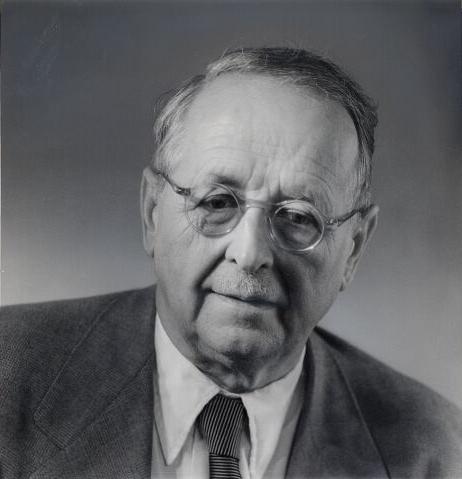
Hermann Weyl

Elmshorn, German Empire
Archival Overview
German-American mathematician and theoretical physicist who invented gauge theory, unified group theory with quantum mechanics, and served as David Hilbert's successor at Gottingen.
Biographical Record
Hermann Weyl (1885–1955) was David Hilbert's most brilliant student at Gottingen. In 1918, he introduced the concept of gauge invariance in an attempt to unify gravitation with electromagnetism—a concept that eventually became the foundational architecture of the Standard Model of particle physics.
Weyl made profound discoveries in continuous group representations (Weyl groups), differential geometry, and mathematical logic. Fleeing Nazi Germany in 1933, he joined the Institute for Advanced Study in Princeton alongside Albert Einstein.
Key Life Milestones
Introduction of Gauge Invariance
Published the first geometric gauge theory, creating the framework for modern particle physics.
Group Theory in Quantum Mechanics
Published 'The Theory of Groups and Quantum Mechanics', uniting symmetry groups with quantum states.
Memorial Guestbook & Tributes
0 messages recordedLeave a Respectful Tribute
Final Resting Place
Perpetual MemorialZurich, Switzerland