 France
•
9 views
France
•
9 views
Henry Cavendish

Nice, France
Archival Overview
Eccentric English natural philosopher who discovered hydrogen ('inflammable air'), proved water is a compound of hydrogen and oxygen, and measured the mass and density of the Earth in 1798.
Biographical Record
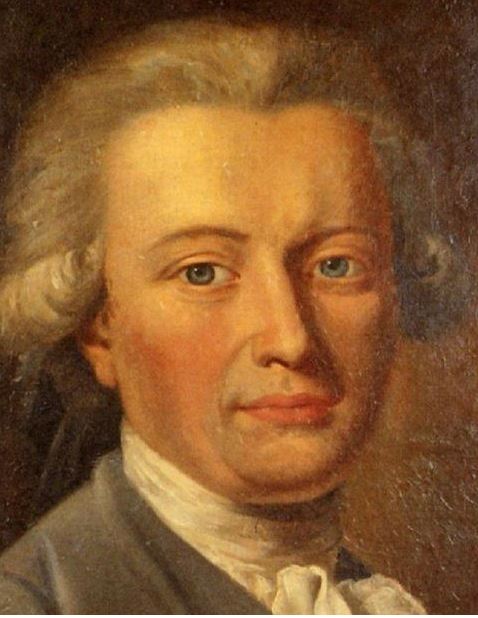
The Honourable Henry Cavendish (1731–1810), grandson of the 2nd Duke of Devonshire, was described by Biot as 'the richest of all the learned and the most learned of all the rich'. Pathologically shy and reclusive, avoiding all eye contact and communicating with his servants solely through written notes left on tables, he conducted experiments of sublime precision in his Clapham laboratory.
In 1766, Cavendish discovered hydrogen (*inflammable air*) by reacting zinc with acid, and later showed that burning hydrogen in oxygen produces water, proving water is a chemical compound rather than an element. In 1798, using John Michell's torsion balance to measure the infinitesimal gravitational attraction between lead balls, he 'weighed the Earth', measuring its density as 5.448 times water (within 1% of modern values) and calculating Newton's gravitational constant $G$.
Key Life Milestones
Discovery of Hydrogen ('Inflammable Air')
Isolated pure hydrogen gas, determined its density, and established that it produces water when burned.
The Cavendish Experiment: Weighing the Earth
Measured Earth's mean density and gravitational constant G using an enclosed torsion balance.
Memorial Guestbook & Tributes
0 messages recordedLeave a Respectful Tribute
Final Resting Place
Perpetual MemorialDerby, United Kingdom