 United States
•
4,091 views
United States
•
4,091 views
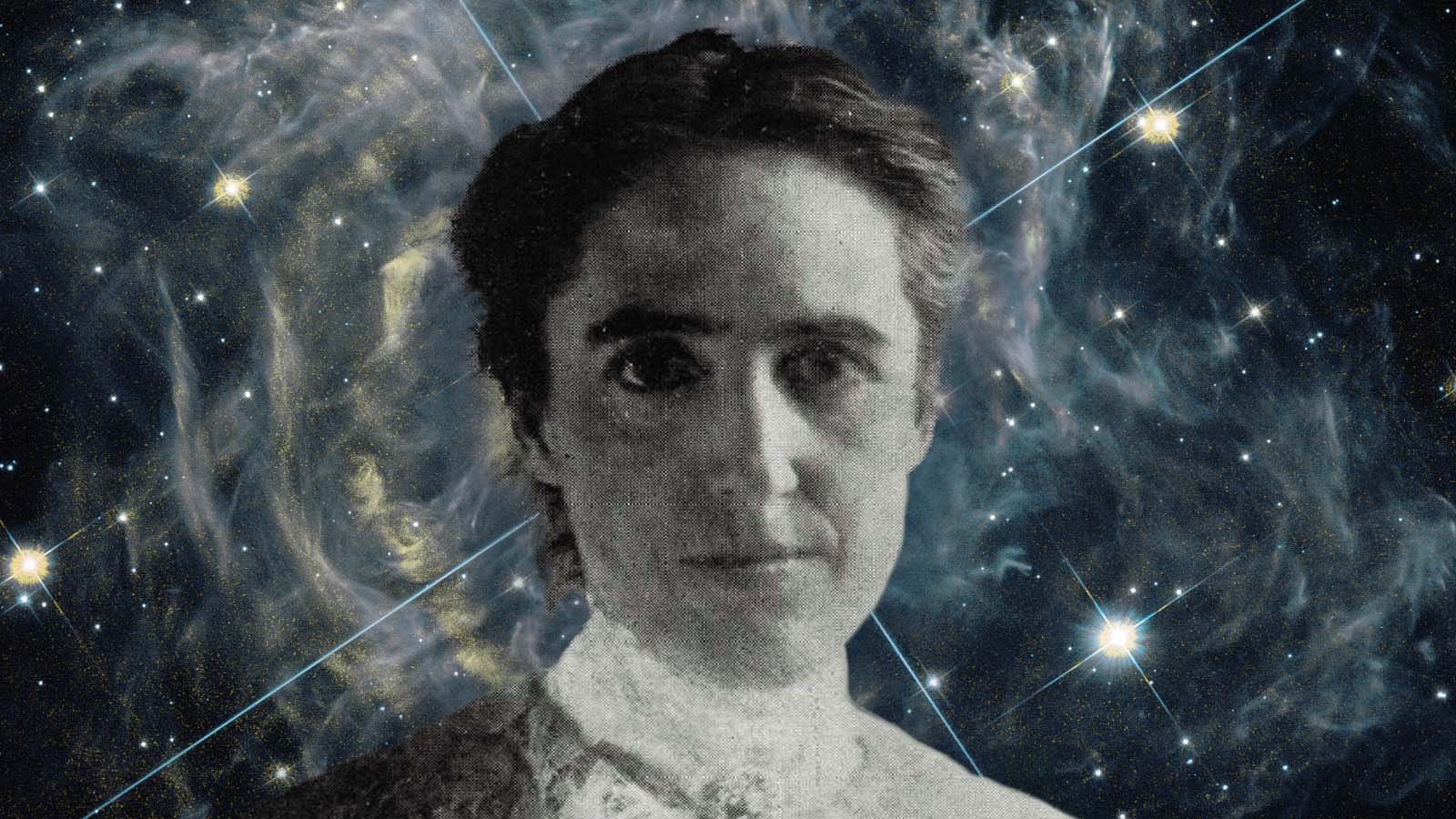
Henrietta Swan Leavitt

Lancaster, Massachusetts, United States
Archival Overview
American astronomer whose discovery of the Cepheid variable period-luminosity relation provided the 'standard candle' to measure the universe.
Biographical Record
Henrietta Swan Leavitt was an American astronomer whose painstaking work as a 'human computer' at Harvard College Observatory unlocked the scale of the universe. Severely hearing impaired following an illness in her youth, Leavitt was employed by Edward Charles Pickering to examine glass photographic plates to catalog and measure stellar brightness.
While cataloging thousands of variable stars in the Small and Large Magellanic Clouds, Leavitt made a momentous discovery in 1908: brighter Cepheid variable stars consistently had longer periods of variation. In 1912, she published the mathematical relationship proving that a Cepheid's intrinsic luminosity is directly proportional to the logarithm of its pulsation period. Because all stars in the Magellanic Cloud were roughly the same distance from Earth, their apparent brightness reflected real luminosity. This period-luminosity relation gave astronomers their first universal 'standard candle'—allowing Edwin Hubble to measure galactic distances and establish cosmic expansion.
Key Life Milestones
Discovery of Cepheid Variability
Discovered 1,777 variable stars in the Magellanic Clouds and noted the relationship between pulsation period and brightness.
The Period-Luminosity Law
Formulated the exact logarithmic period-luminosity relation, providing astronomy's foundational standard candle for cosmic distance measurement.
Memorial Guestbook & Tributes
0 messages recordedLeave a Respectful Tribute
Final Resting Place
Perpetual MemorialCambridge, Massachusetts, United States