 French Empire (France)
•
1,524 views
French Empire (France)
•
1,524 views
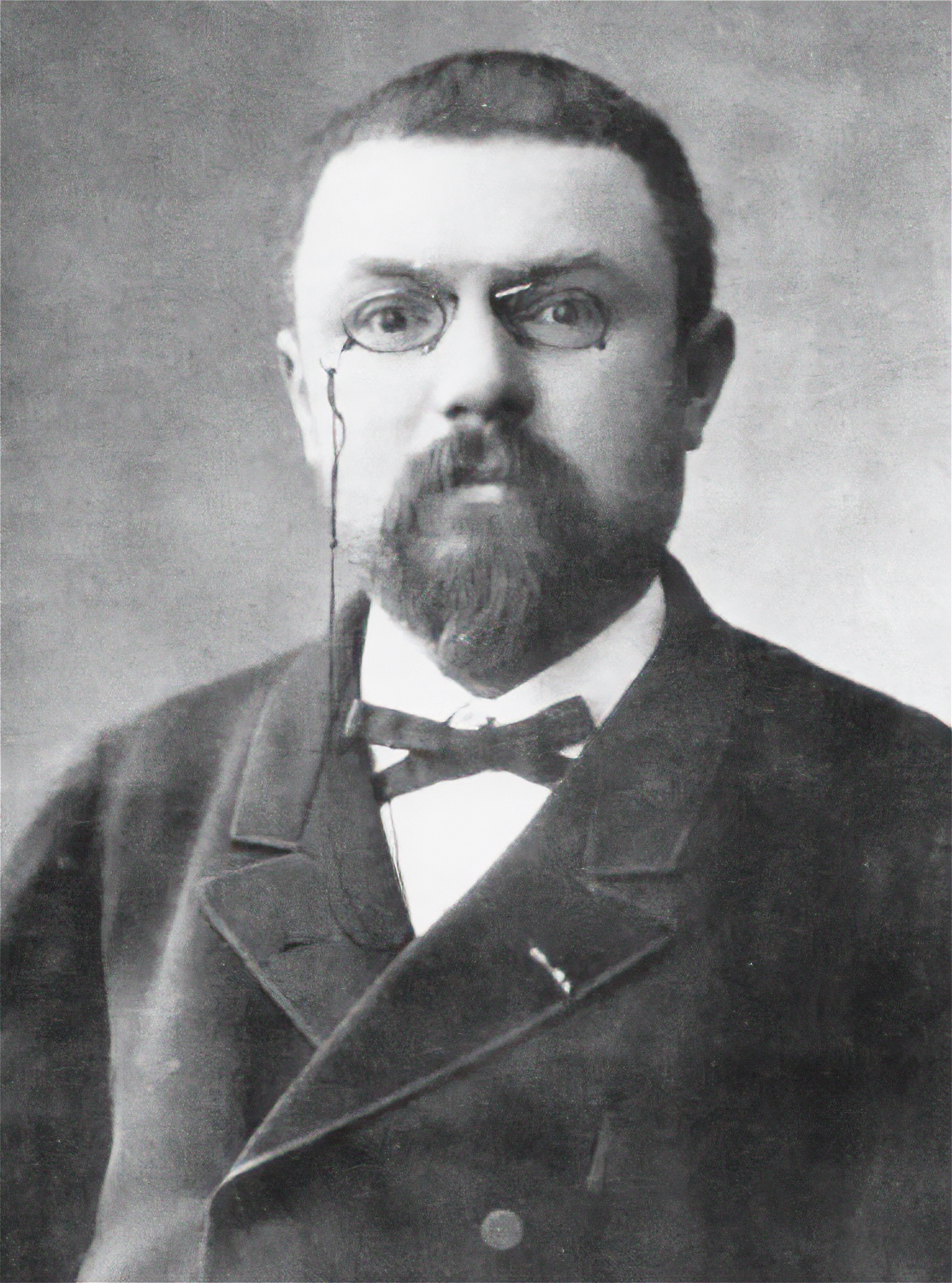
Henri Poincaré

Nancy, Lorraine, French Empire (France)
Archival Overview
French polymath and 'Last Universalist' who founded algebraic topology, discovered deterministic chaos, and formulated the Poincaré conjecture.
Biographical Record
Jules Henri Poincaré was a towering French mathematician, theoretical physicist, engineer, and philosopher of science often called the 'Last Universalist'—the last person capable of mastering and contributing to every field of mathematics known in his day. Educated at the École Polytechnique and École des Mines, Poincaré served as professor at the Sorbonne and was elected to the Académie des Sciences at age thirty-three.
Winning King Oscar II of Sweden's mathematical prize in 1889 for analyzing the gravitational three-body problem, Poincaré discovered that non-linear dynamical systems can exhibit sensitive dependence on initial conditions, single-handedly founding modern chaos theory. In 1895, with his monograph Analysis Situs, he invented algebraic topology, homotopy, and the fundamental group. In 1904, he proposed the famous Poincaré conjecture regarding 3-spheres, which stood as one of the Seven Millennium Prize Problems until solved by Grigori Perelman a century later. He independently derived the Lorentz transformations and relativistic spacetime velocity additions before Einstein.
Key Life Milestones
Three-Body Problem & Discovery of Chaos
Won King Oscar II's prize, discovering sensitive dependence on initial conditions in celestial dynamics, founding chaos theory.
Formulation of the Poincaré Conjecture
Formulated the Millennium Problem conjecture that every simply connected closed 3-manifold is homeomorphic to a 3-sphere.
Memorial Guestbook & Tributes
0 messages recordedLeave a Respectful Tribute
Final Resting Place
Perpetual MemorialParis, France