 Netherlands
•
1,328 views
Netherlands
•
1,328 views
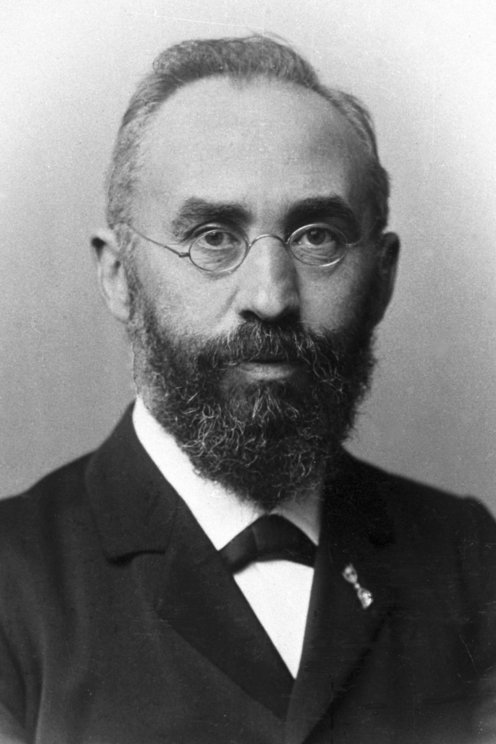
Hendrik Lorentz

Arnhem, Netherlands
Archival Overview
Dutch physicist who unified Maxwell's electromagnetism with electron theory and formulated the Lorentz transformations.
Biographical Record
Hendrik Antoon Lorentz was a Dutch theoretical physicist of towering international stature who bridged nineteenth-century classical physics and twentieth-century modern physics. Appointed professor of theoretical physics at Leiden University at only twenty-four, Lorentz refined James Clerk Maxwell's electromagnetic theory by proposing that matter consists of microscopic electric charges (electrons) and that electromagnetic waves are generated by their motion.
Lorentz theoretically explained the Zeeman effect (the splitting of spectral lines in a magnetic field), sharing the second-ever Nobel Prize in Physics in 1902 with Pieter Zeeman. Seeking to reconcile electromagnetism with the null result of the Michelson-Morley experiment, he introduced the concept of local time and formulated the Lorentz transformations describing how space and time coordinates change between moving reference frames. These equations formed the mathematical scaffold upon which Albert Einstein constructed the special theory of relativity. Einstein frequently revered Lorentz as his intellectual father figure.
Key Life Milestones
Nobel Prize in Physics
Shared the Nobel Prize in Physics with Pieter Zeeman for their investigations into the influence of magnetism upon radiation phenomena.
The Lorentz Transformations
Published the mathematical equations describing relativistic length contraction and time dilation, laying the groundwork for Einstein's relativity.
Memorial Guestbook & Tributes
0 messages recordedLeave a Respectful Tribute
Final Resting Place
Perpetual MemorialHaarlem, Netherlands