 Germany
•
11 views
Germany
•
11 views
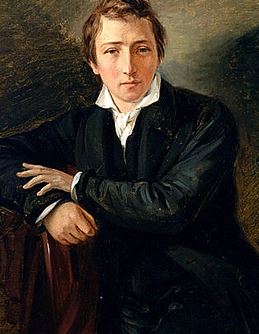
Christian Johann Heinrich Heine

Düsseldorf, Germany
Archival Overview
One of Germany's greatest lyric poets and political satirists whose Book of Songs (Buch der Lieder)—featuring Die Lorelei—was set to music thousands of times by Schubert and Schumann, famously warning: 'Where they burn books, they will ultimately burn people.'
Biographical Record
Heinrich Heine (1797–1856), born into a Jewish family in Düsseldorf, combined the crystalline, yearning melody of German Romantic folk song with biting political irony and revolutionary wit. His 1827 collection Buch der Lieder (Book of Songs), containing immortal lyrics like Die Lorelei and Du bist wie eine Blume, became the most frequently set poetry in musical history, inspiring lieder by Franz Schubert, Robert Schumann, and Felix Mendelssohn.
Hounded by Prussian state censorship for his radical democratic views, Heine went into permanent exile in Paris in 1831, befriending Karl Marx, Honoré de Balzac, and George Sand. In his 1821 tragedy Almansor, he uttered his horrifyingly prophetic axiom: 'Where they burn books, they will in the end also burn human beings.' Paralyzed by spinal tuberculosis during his final eight years, he dictated searing late masterpieces from his Parisian 'mattress-grave' (*Matratzengruft*).
Key Life Milestones
Publication of Buch der Lieder (Book of Songs)
Published his definitive poetry collection, becoming the most widely composed lyric poet in European classical music.
Publication of Deutschland. Ein Wintermärchen (A Winter's Tale)
Published his scathing satirical verse epic attacking Prussian militarism and German political backwardness.
Memorial Guestbook & Tributes
0 messages recordedLeave a Respectful Tribute
Final Resting Place
Perpetual MemorialParis, France