 India
•
4 views
India
•
4 views
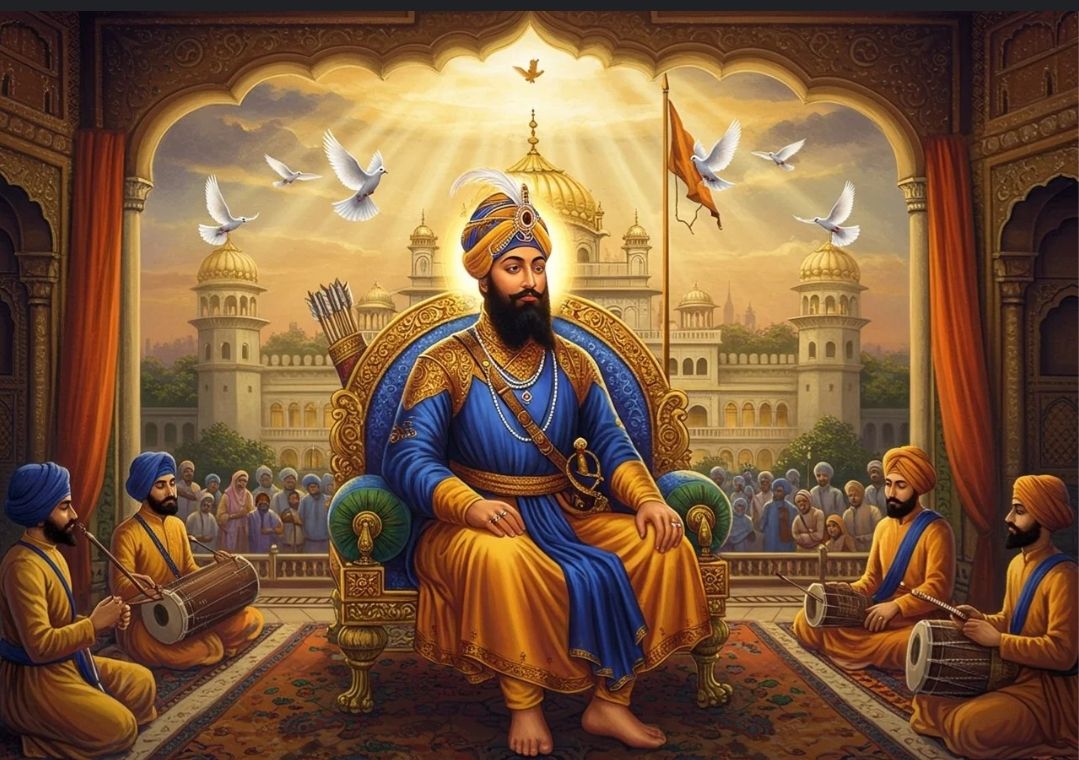
Guru Hargobind Ji (Sixth Sikh Guru & Master of Miri-Piri)

Amritsar, India
Archival Overview
Son of the martyred Guru Arjan, Guru Hargobind transformed the Sikh community by introducing the doctrine of Miri-Piri (temporal sovereignty and spiritual power), wearing two swords, raising the Akal Takht, and liberating fifty-two kings from Gwalior Fort.
Biographical Record
Guru Hargobind Ji became the sixth Guru at age eleven following the brutal execution of his father, Guru Arjan Dev, by Mughal Emperor Jahangir. Understanding that unresisted tyranny invites destruction upon the gentle, he initiated a revolutionary paradigm shift in Indian religious history.
The Doctrine of Miri and Piri
At his investiture ceremony, Guru Hargobind refused the traditional woolen cord (seli) and instead strapped on two swords: Piri representing spiritual authority and Miri representing temporal sovereignty and justice. Directly opposite the Golden Temple, he erected the Akal Takht (The Throne of the Timeless One)—a sovereign seat where royal edicts were issued, martial sports celebrated, and justice dispensed without submission to imperial decrees.
Bandi Chhor: Liberator of 52 Kings
Imprisoned by Jahangir in Gwalior Fort, Guru Hargobind earned the deep admiration of his jailers. When the emperor agreed to release him, the Guru refused to walk free unless fifty-two Hindu rajahs wrongfully imprisoned with him were also liberated. The emperor conceded that whoever could hold onto the Guru's cloak could leave; Guru Hargobind had a custom cloak made with fifty-two long hems, allowing every single king to hold a cord and walk to freedom—an event celebrated annually during Diwali as Bandi Chhor Divas.
Key Life Milestones
Donning the Swords of Miri-Piri & Raising the Akal Takht
Establishes the sovereign throne of temporal and spiritual justice facing the Golden Temple in Amritsar.
Bandi Chhor: Liberation of 52 Kings from Gwalior Fort
Secures the historic release of fifty-two imprisoned monarchs, celebrated globally as Bandi Chhor Divas.
Memorial Guestbook & Tributes
0 messages recordedLeave a Respectful Tribute
Final Resting Place
Perpetual MemorialKiratpur Sahib, India