 Czech Republic
•
7 views
Czech Republic
•
7 views
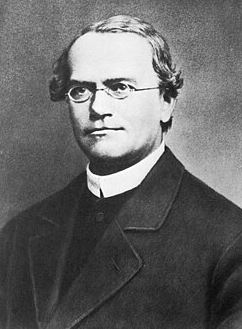
Gregor Mendel

Heinzendorf bei Odrau (Hynčice, Silesia), Czech Republic
Archival Overview
Augustinian abbot whose meticulous eight-year breeding experiments with 29,000 pea plants (Pisum sativum) discovered the fundamental laws of genetic inheritance (dominant and recessive traits).
Biographical Record
Johann Mendel (1822–1884), who took the religious name Gregor upon entering the Augustinian Abbey of St Thomas in Brünn (Brno), studied physics and mathematics under Christian Doppler in Vienna. Between 1856 and 1863, in the two-hectare monastery garden, Mendel cultivated over 29,000 pea plants (*Pisum sativum*).
By tracking seven distinct inherited traits (such as smooth vs. wrinkled seeds and tall vs. short stems) across successive generations, Mendel uncovered the mathematical laws of heredity: the Law of Segregation and the Law of Independent Assortment. He proved that heredity is particulate, governed by discrete units (now called genes) passed unchanged from parents to offspring. Rediscovered in 1900, his work founded modern genetics.
Key Life Milestones
Presentation of 'Experiments on Plant Hybridization'
Presented his statistical laws of inheritance (dominant and recessive factors) to the Natural History Society of Brno.
Publication of 'Versuche über Pflanzen-Hybriden'
Published his foundational paper establishing the mathematical ratios of genetic inheritance across generations.
Memorial Guestbook & Tributes
0 messages recordedLeave a Respectful Tribute
Final Resting Place
Perpetual MemorialBrno (Moravia), Czech Republic