 Germany
•
8 views
Germany
•
8 views
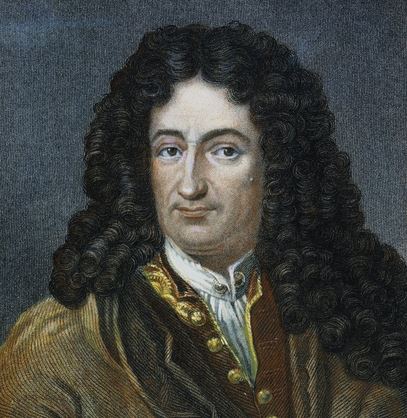
Gottfried Wilhelm Leibniz

Leipzig (Saxony), Germany
Archival Overview
Universal genius who co-invented infinitesimal calculus, built mechanical calculators, and formulated the Monadology, the Principle of Sufficient Reason, and optimistic theodicy.
Biographical Record
Gottfried Wilhelm Leibniz (1646–1716) was among the most prodigious polymaths in world history. Serving as privy councillor and librarian to the House of Brunswick in Hanover, he made monumental breakthroughs in mathematics, physics, law, diplomacy, geology, history, and linguistic genealogy.
Leibniz independently invented infinitesimal calculus, creating the notation (such as $dx$ and the integral sign $int$) used to this day. In philosophy, his Monadology (1714) envisioned the cosmos as composed of infinite immaterial spiritual units called 'monads', synchronized in pre-established harmony by God, creating 'the best of all possible worlds'.
Key Life Milestones
Publication of Infinitesimal Calculus
Published the first paper on differential calculus in Acta Eruditorum, introducing modern mathematical notation.
Composition of 'The Monadology'
Formulated his metaphysical system of monadic windowless substances and divine pre-established harmony.
Memorial Guestbook & Tributes
0 messages recordedLeave a Respectful Tribute
Final Resting Place
Perpetual MemorialHanover, Germany