 United States
•
2,958 views
United States
•
2,958 views
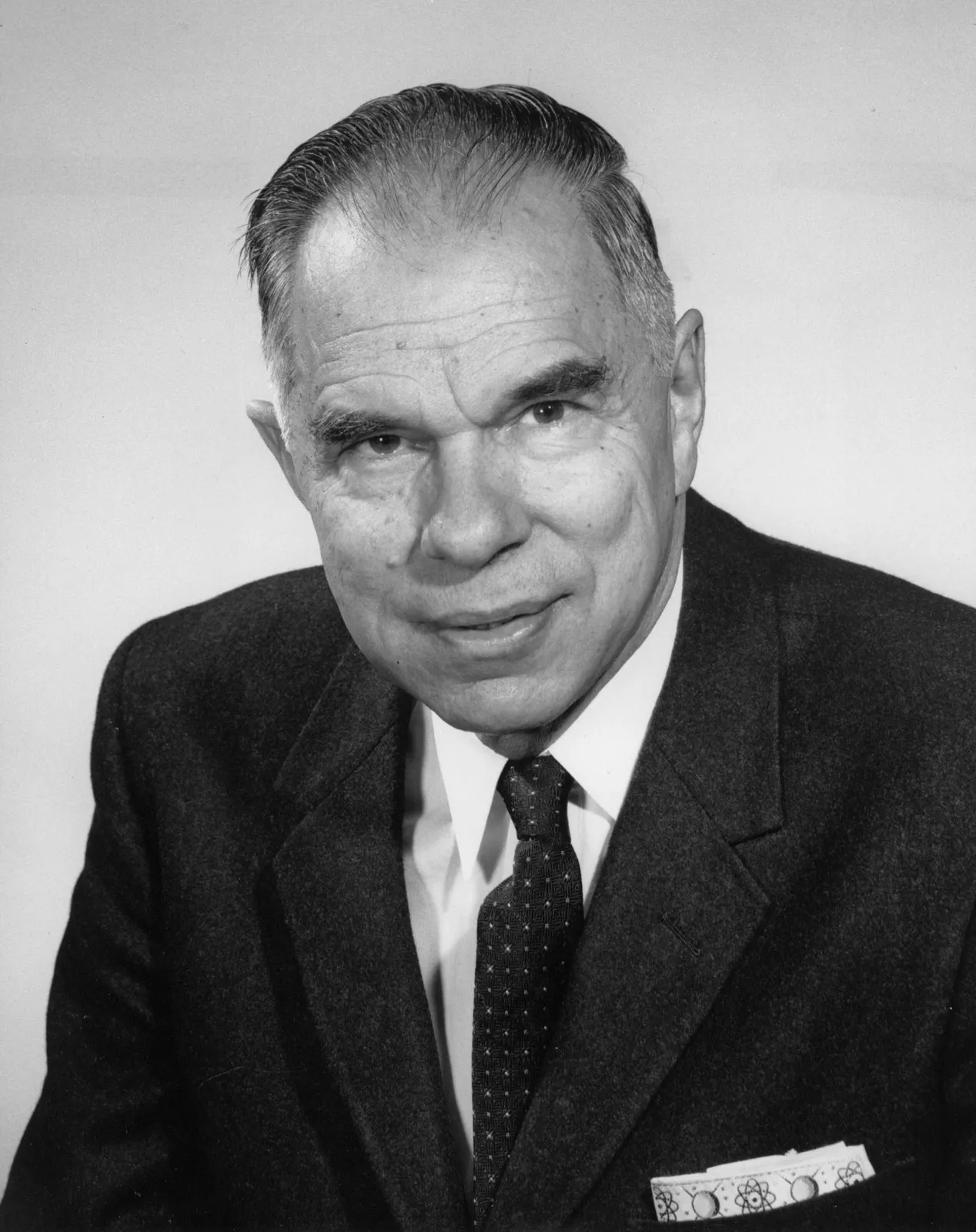
Glenn T. Seaborg

Ishpeming, Michigan, United States
Archival Overview
American nuclear chemist who co-discovered plutonium and nine other transuranic elements, winning the 1951 Nobel Prize.
Biographical Record
Glenn Theodore Seaborg was an American nuclear chemist who redrew the periodic table of elements and expanded the frontiers of matter. Educated at UCLA and UC Berkeley, Seaborg worked with Edwin McMillan using the Berkeley 60-inch cyclotron to create artificial chemical elements beyond uranium.
Between 1940 and 1958, Seaborg co-discovered ten transuranium elements: plutonium, americium, curium, berkelium, californium, einsteinium, fermium, mendelevium, nobelium, and element 106. In 1944, he formulated the actinide concept, correctly proposing that heavy radioactive elements form an actinide series analogous to the lanthanides, placing them beneath the main periodic table. He shared the 1951 Nobel Prize in Chemistry with McMillan. Seaborg served as chairman of the Atomic Energy Commission under Presidents Kennedy, Johnson, and Nixon, advocating for the 1963 Limited Nuclear Test Ban Treaty. In 1997, element 106 was officially named seaborgium (Sg)—the first time an element was named after a living person.
Key Life Milestones
Co-Discovery of Plutonium
Synthesized and chemically isolated plutonium-239 at UC Berkeley, proving its fissile properties for nuclear energy.
Nobel Prize in Chemistry
Awarded the Nobel Prize in Chemistry jointly with Edwin McMillan for their discoveries in the chemistry of the transuranium elements.
Memorial Guestbook & Tributes
0 messages recordedLeave a Respectful Tribute
Final Resting Place
Perpetual MemorialEl Cerrito, California, United States