 United States
•
2,842 views
United States
•
2,842 views
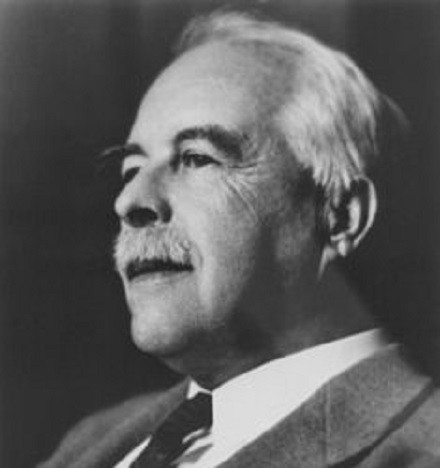
Gilbert N. Lewis

Weymouth, Massachusetts, United States
Archival Overview
Colossal physical chemist who discovered the covalent bond, created Lewis dot structures, and generalized acid-base theory.
Biographical Record
Gilbert Newton Lewis was an American physical chemist whose theoretical and experimental insights transformed modern understanding of chemical bonding. As longtime dean of the College of Chemistry at UC Berkeley, Lewis built Berkeley into one of the preeminent chemical research institutions in the world, mentoring future Nobel laureates including Glenn Seaborg, Melvin Calvin, and Harold Urey.
In 1916, Lewis published his historic paper 'The Atom and the Molecule', introducing the revolutionary concept of the covalent bond—wherein atoms achieve chemical stability by sharing pairs of valence electrons. To visualize electron sharing and octets, he devised Lewis dot structures, which remain taught in every chemistry classroom on Earth. In 1923, he generalized chemical reactivity with the Lewis acid-base theory (electron pair acceptors and donors), isolated pure heavy water (deuterium oxide) in 1933, and coined the word photon for the quantum of light in 1926. Despite being nominated for the Nobel Prize forty-one times, he never received the award.
Key Life Milestones
Discovery of the Covalent Bond
Proposed electron pair sharing as the chemical bond and introduced Lewis dot structures and the cubical octet model.
Lewis Acid-Base Theory
Formulated the electronic theory of acids and bases as electron-pair acceptors and electron-pair donors.
Memorial Guestbook & Tributes
0 messages recordedLeave a Respectful Tribute
Final Resting Place
Perpetual MemorialEl Cerrito, California, United States