 Belgium
•
4,368 views
Belgium
•
4,368 views
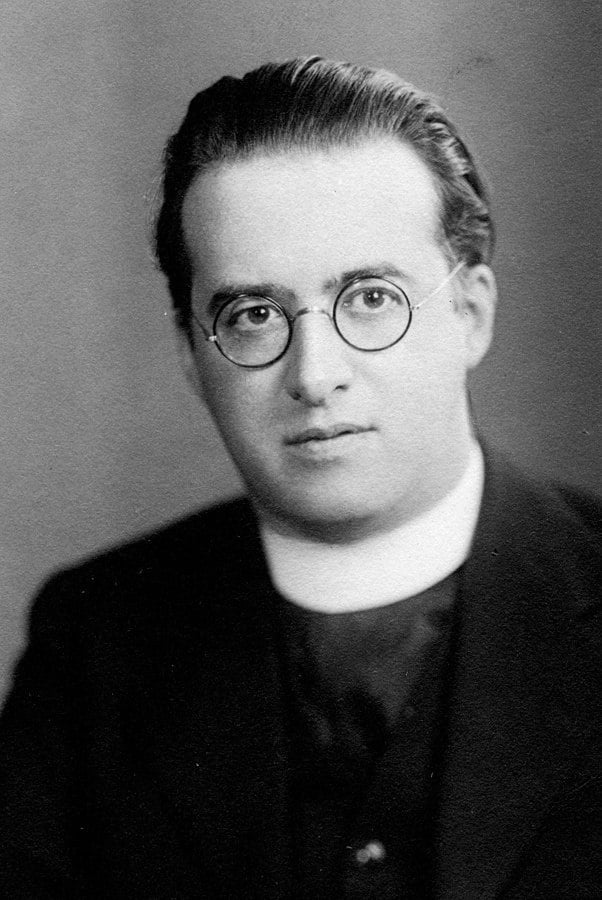
Georges Lemaître

Charleroi, Wallonia, Belgium
Archival Overview
Belgian Catholic priest, astronomer, and cosmologist who proposed the Big Bang theory of the universe.
Biographical Record
Georges Henri Joseph Édouard Lemaître was a Belgian Catholic prelate, mathematician, and theoretical physicist who first conceived the modern concept of the origin of the cosmos. After serving as an artillery officer in World War I where he was awarded the Croix de Guerre, Lemaître was ordained a priest in 1923 while simultaneously studying astrophysics at Cambridge under Arthur Eddington and at MIT and Harvard.
In 1927, two years before Edwin Hubble's famous paper, Lemaître solved Einstein's general relativity field equations to propose that the universe is expanding, and derived what is now known as the Hubble-Lemaître law. In 1931, taking his concept to its boldest logical conclusion, he proposed his famous 'hypothesis of the primeval atom' (or 'Cosmic Egg')—postulating that the cosmos originated from a single infinitely dense quantum singularity on 'a day without yesterday'. Initially dismissed by Einstein, his model was verified by the 1964 discovery of the cosmic microwave background, which Lemaître learned of on his deathbed.
Key Life Milestones
Discovery of Cosmic Expansion
Solved Einstein's equations to derive the expansion of the universe and calculate the expansion rate ahead of Edwin Hubble.
The Primeval Atom (Big Bang)
Formulated the hypothesis that the universe began in the cataclysmic explosion of a primeval atom, founding modern Big Bang cosmology.
Memorial Guestbook & Tributes
0 messages recordedLeave a Respectful Tribute
Final Resting Place
Perpetual MemorialLiège, Wallonia, Belgium