 Kingdom of Great Britain
•
4,545 views
Kingdom of Great Britain
•
4,545 views
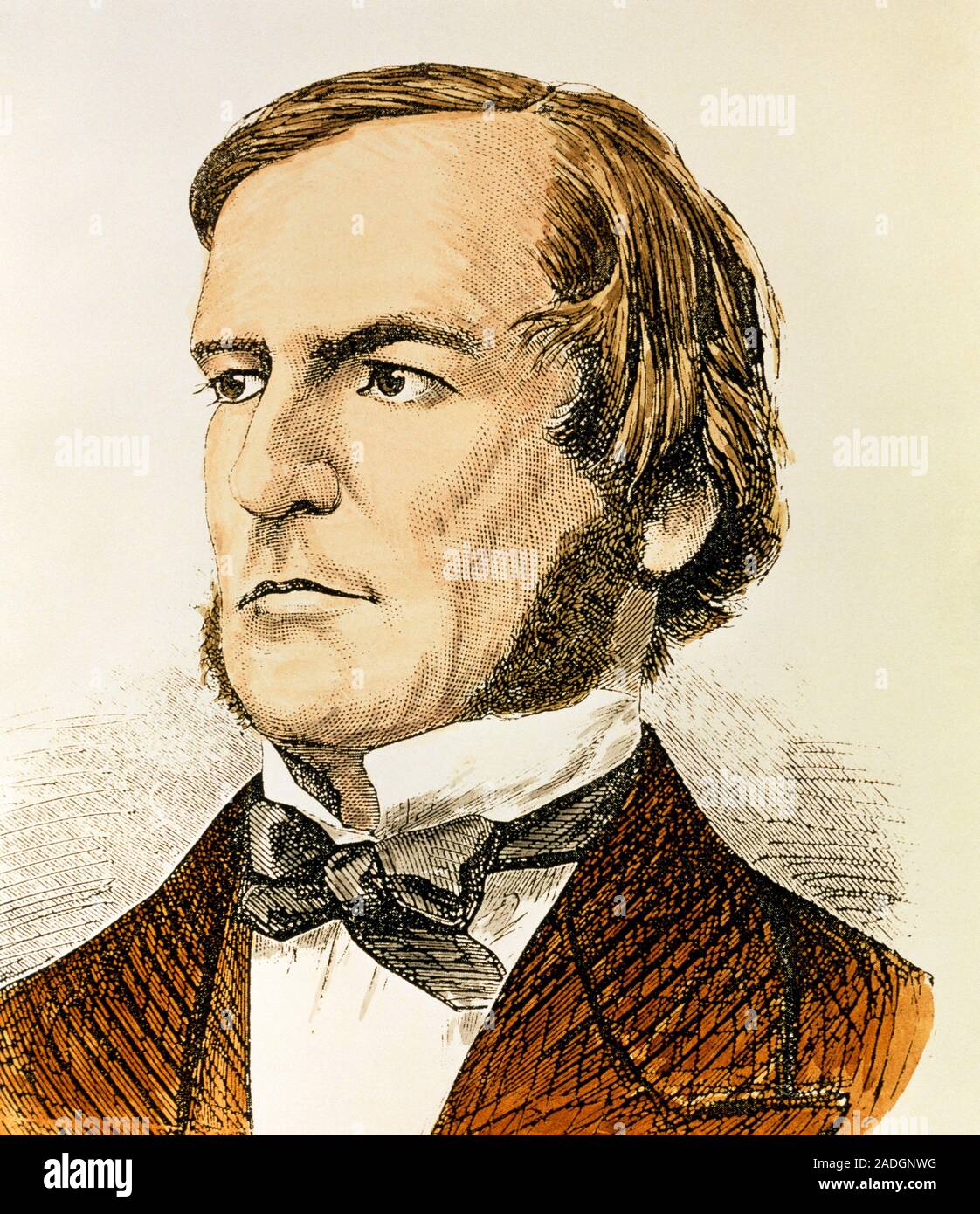
George Boole

Lincoln, Lincolnshire, Kingdom of Great Britain
Archival Overview
Self-taught English mathematician and philosopher who created Boolean algebra, the mathematical foundation of all digital computers.
Biographical Record
George Boole was an English mathematician, logician, and philosopher whose algebraic formulation of human thought created the foundational architecture of the modern Information Age. The son of an impoverished cobbler in Lincoln, Boole was largely self-educated, teaching himself Latin, Greek, French, German, and advanced mathematics while supporting his family as a primary school teacher.
In 1849, despite lacking a university degree, Boole was appointed the inaugural Professor of Mathematics at Queen's College, Cork (now University College Cork) in Ireland. In 1854, he published his masterwork, An Investigation of the Laws of Thought. In it, Boole unified logic and mathematics by reducing Aristotelian logic to an algebraic calculus using binary operations: 1 and 0, and the logical operators AND, OR, and NOT. Nearly a century later, Claude Shannon recognized that Boolean algebra perfectly mapped onto electrical switching circuits, forming the binary logic that drives every microprocessor, smartphone, and computer algorithm on Earth today.
Key Life Milestones
The Mathematical Analysis of Logic
Published his groundbreaking pamphlet demonstrating that logical propositions can be solved through algebraic symbols.
An Investigation of the Laws of Thought
Published the seminal treatise establishing Boolean algebra, creating the binary mathematical language of modern digital computing.
Memorial Guestbook & Tributes
0 messages recordedLeave a Respectful Tribute
Final Resting Place
Perpetual MemorialBlackrock, Cork, Ireland