 Germany
•
12 views
Germany
•
12 views
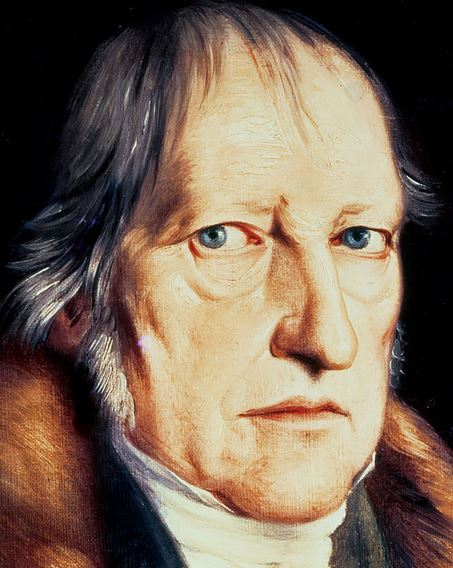
Georg Wilhelm Friedrich Hegel

Stuttgart (Württemberg), Germany
Archival Overview
Master of German Idealism whose dialectical philosophy conceptualized historical development as the progressive self-realization of Spirit (Geist) toward absolute freedom.
Biographical Record
Georg Wilhelm Friedrich Hegel (1770–1831), educated alongside Hölderlin and Schelling at the Tübingen Stift, rose to become the undisputed philosophical giant of Berlin University. Finishing his Phenomenology of Spirit (1807) as Napoleon's cannons boomed at the Battle of Jena, he saw the French emperor as 'the World-Soul on horseback'.
Hegel revolutionized Western thought by demonstrating that truth is historical and dynamic rather than static. Reality develops through a triadic dialectical progression (*Aufhebung*)—reconciling contradictions to reach higher unities. For Hegel, world history is the grand narrative of Spirit (*Geist*) coming to know itself as free.
Key Life Milestones
Publication of 'Phenomenology of Spirit'
Published his dialectical tour-de-force tracing the evolution of human consciousness from sense-certainty to Absolute Knowing.
Publication of 'Elements of the Philosophy of Right'
Articulated his comprehensive philosophy of the modern constitutional state, civil society, and ethical life (Sittlichkeit).
Memorial Guestbook & Tributes
0 messages recordedLeave a Respectful Tribute
Final Resting Place
Perpetual MemorialBerlin, Germany